Key Takeaways
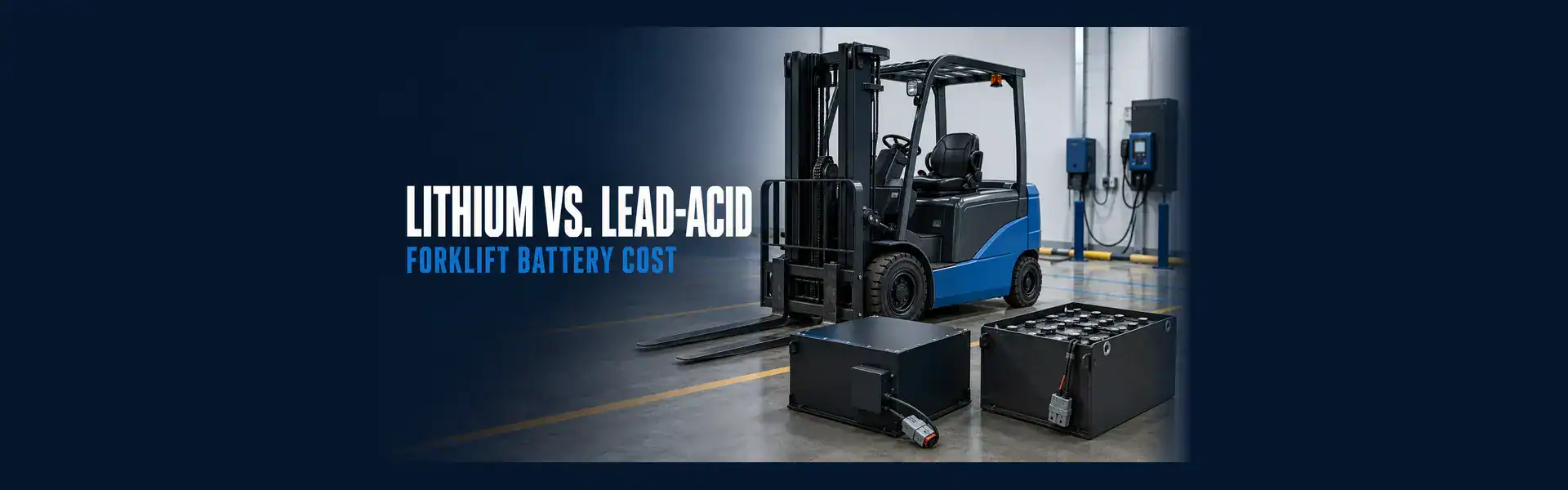
- Lead-acid batteries usually minimize initial investment. Lithium-ion can produce a lower multi-year cost in intensive or multi-shift operations where opportunity charging, lower maintenance and fewer battery changes have measurable value. Compare two complete battery-and-charger systems using the same workload and ownership period.
A lightly used single-shift truck with a long overnight charging window may not recover the additional lithium-ion investment quickly. A busy multi-shift fleet may reach a different conclusion because one lithium-ion battery can sometimes support scheduled charging during breaks instead of relying on spare batteries and change equipment. Use the same operating horizon and workload for both options before comparing quotations.
The truck must still match the load, lift height, route and aisle described in the Anxing forklift selection guide. Then compare its energy systems on a like-for-like basis.
Purchase Price Is Not Total Cost of Ownership
A battery quotation can contain the battery, charger and cables, but the operating system around it creates additional costs. Lead-acid fleets may require watering, cleaning, equalization according to the supplier’s instructions, ventilation provisions, charging space and battery-changing equipment. Multi-shift operation may also require spare batteries. Lithium-ion systems avoid watering and can support shorter charging events, but they add an integrated battery-management system, chemistry-specific charging requirements and a higher initial investment.
| Cost factor | Flooded lead-acid | Lithium-ion |
|---|---|---|
| Initial battery price | Usually lower for a comparable industrial application | Usually higher because the pack includes cells, controls and a battery-management system |
| Charging strategy | Best matched to planned full charging and any cooling or equalization requirements specified by the supplier | Can support planned opportunity charging when the pack, charger and duty cycle are designed for it |
| Spare batteries | May be needed for multi-shift availability | May be reduced or avoided where charging opportunities cover the energy demand |
| Routine battery labor | Watering and cleaning may add scheduled labor | No watering; inspections and charger-system checks still apply |
| Charging area | May need dedicated space, ventilation and provisions required by local rules | Still needs an approved protected charging location, but the infrastructure can differ |
| Energy cost | Depends on charger efficiency, battery condition, charging practice and tariff | Often has higher charging efficiency, but savings must be calculated from measured or supplier data |
| Replacement timing | Sensitive to maintenance, temperature and charging discipline | Can offer a longer cycle life, subject to chemistry, depth of discharge, temperature and BMS limits |
| Strongest economic signal | Low utilization, limited capital budget and a workable charging window | High utilization, multiple shifts, expensive labor or costly battery-change downtime |
These are general tendencies, not guaranteed savings. Compare supplier data for the proposed battery rather than generic claims for the chemistry.
Eight Costs to Include in the Comparison
1. Battery, charger and required controls
Compare complete delivered systems at the same forklift voltage and required usable energy. Confirm whether each price includes the charger, cables, connectors, display, communications, battery-management system, ballast and commissioning. A lower battery-only price is not comparable with a complete lithium system.
2. Spare batteries and change equipment
Determine whether the shift plan requires a second lead-acid battery. Include the spare, approved changing equipment and floor area. Do not assume opportunity charging eliminates a lithium spare until the energy balance covers peak days.
3. Charging infrastructure
Include electrical upgrades, circuits, protection devices, charger mounting, traffic protection and any ventilation or spill provisions required locally. Requirements depend on the battery, charging method and destination rules.
4. Electricity and demand charges
Use measured charger input where possible. Include time-of-use tariffs and demand charges: several high-power chargers operating together can affect the bill even when total kilowatt-hours decrease.
5. Maintenance labor and materials
For lead-acid, calculate watering, inspection, cleaning, equalization and corrosion-control labor. For lithium-ion, include inspections, diagnostic support, connector care and planned service. Neither system requires zero attention.
6. Charging and battery-change downtime
Value only downtime that affects production. Multiply affected minutes by changes per year and a defensible cost of lost truck time; do not convert every idle minute into lost revenue.
7. Replacement batteries over the study period
Ask for warranted operating conditions, cycle-life basis and the capacity threshold defining end of life. Cycle counts are not comparable unless depth of discharge, charge rate, temperature and cycle definition are aligned.
8. End-of-life handling and residual value
Include removal, compliant transport, recycling or disposal and any documented residual value. Use current local quotations because rules and recovery markets vary.
A Practical Five-Year Forklift Battery TCO Formula
Five-year TCO = initial battery system + chargers + infrastructure + spare batteries and handling equipment + electricity + maintenance labor and materials + production-impacting downtime + replacements + end-of-life cost − documented residual value.
Use the same workload, local currency and tax treatment for both systems. If lithium requires more upfront investment, a simple first check is:
Simple payback period = additional lithium-ion upfront cost ÷ annual operating-cost savings.
Payback is only a screening tool. A large fleet should also compare discounted cash flows and test more than one workload scenario.
| Input | How to calculate it | Evidence to request |
|---|---|---|
| Annual truck energy | Measured charger input or modeled duty-cycle energy × working days | Meter data, charger logs or supplier duty-cycle calculation |
| Battery-service labor | Minutes per task × tasks per year × loaded labor rate | Current maintenance records and proposed service schedule |
| Battery-change impact | Production-affected minutes × annual changes × cost per minute | Shift observation and throughput records |
| Replacement timing | Expected cycles required ÷ supported cycles per battery | Supplier conditions, warranty and end-of-life definition |
| Charging capacity | Simultaneous charger load compared with site electrical capacity | Charger input specification and electrician review |
Which Operating Profiles Favor Each Battery?
Single shift with predictable idle time
Lead-acid can be economical when one battery covers the work, maintenance is available and charging does not affect production. Lithium savings should still be demonstrated.
Two or three shifts with short breaks
Lithium-ion becomes more attractive when breaks provide enough charging time and remove battery changes or spare packs. Charger power and the break schedule must still be modeled.
Cold storage or temperature extremes
Temperature affects both chemistries and can change charge acceptance, usable capacity and life. Request operating and charging temperature limits for the exact pack. Cold-store projects may require heating, protected charger locations or a different capacity reserve. Do not transfer room-temperature runtime estimates directly to a freezer application.
Mixed fleet or distributor inventory
Standardization can reduce spare-parts and training complexity, but only where trucks share compatible voltages, connectors and charging requirements. Distributors should compare local battery availability, diagnostic support and replacement lead time alongside theoretical TCO.
Why a Lead-Acid-to-Lithium Conversion Needs Engineering Review
A forklift battery can form part of the truck’s counterweight and stability calculation. A lighter lithium pack may require approved ballast or a pack engineered to the correct weight and center of gravity. The conversion review must cover battery compartment dimensions, minimum and maximum weight, voltage, current demand, regenerative current, connectors, communication, thermal management and charger compatibility.
Using the wrong charger or bypassing the battery-management system can damage equipment and create a serious hazard. The final battery, charger and truck should be approved as one configuration, with updated labels or capacity information where required. A conversion should not proceed merely because a battery fits inside the compartment.
How Current Anxing Models Frame the Battery Decision
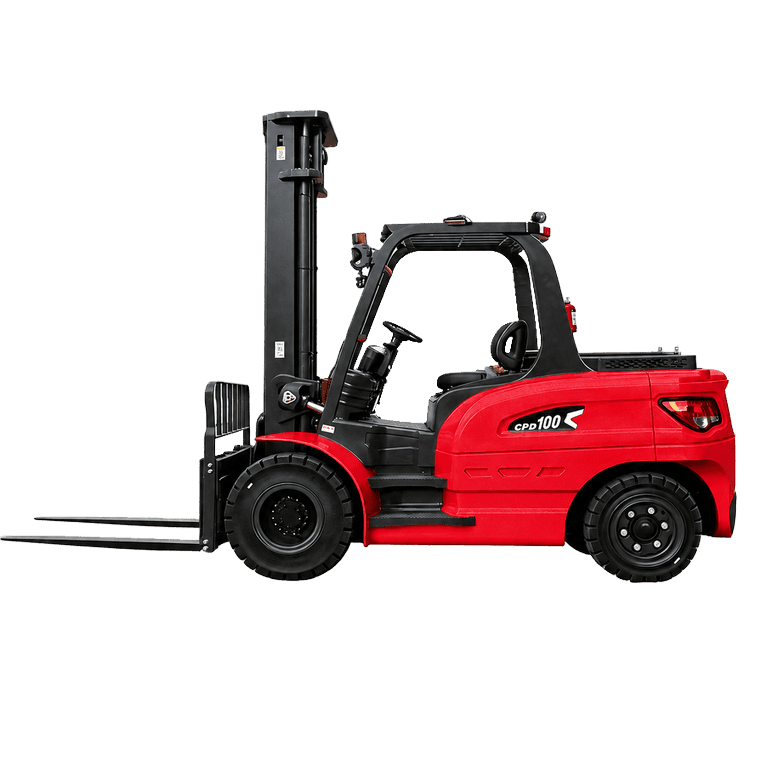
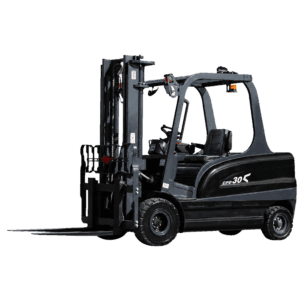
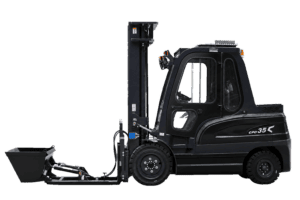
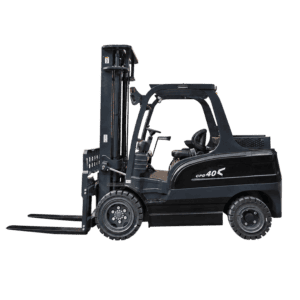
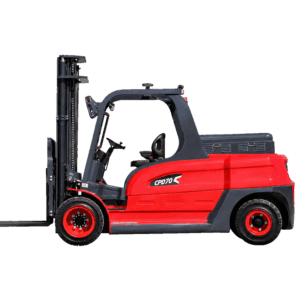
The current Anxing 1.5–3.5 ton electric forklift range lists a customizable 60 V system and 70–200 Ah battery configurations. The public page does not assign one chemistry to every capacity, so a quotation must confirm the selected chemistry, usable capacity, charger and expected duty.
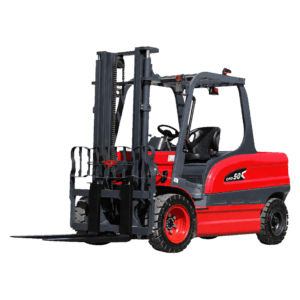
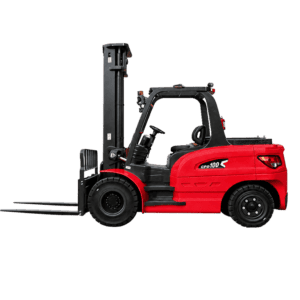
The Anxing 5 ton electric forklift lists an 80 V / 300 Ah customizable battery system. Its product information specifically invites buyers requesting lithium-ion to provide daily working hours, charging windows and destination power supply for configuration review. This is important because a heavy-load truck’s energy demand cannot be inferred from voltage and amp-hours alone.
For compact operations, the Anxing 1.2–2 ton three-wheel electric forklift lists a 60 V / 70 Ah battery on selected configurations and notes that the battery and charger can be customized. A short-route warehouse may choose differently from a high-throughput production facility even when both use the same nominal truck capacity. The manufacturing and production solution explains why shift rhythm and charging opportunities must be planned with material flow.
A Battery Selection Process for Buyers
- Confirm the forklift first. Define the load, lift height, attachment, route, gradients and truck class before sizing its battery.
- Measure utilization. Record travel, lifts, hours, shifts, peak periods and seasonal demand instead of stating only “eight hours per day.”
- Map charging windows. Identify breaks, shift changes, overnight periods and days when the truck cannot stop.
- Verify electrical supply. Provide voltage, phase, frequency, available capacity and permitted charger locations.
- Request complete systems. Obtain battery, charger, connector, controls, ballast, infrastructure and commissioning details.
- Build both TCO cases. Apply local electricity, labor, space, maintenance and downtime values over the same period.
- Test sensitivity. Recalculate for a second shift, higher electricity tariff, shorter battery life or future fleet expansion.
- Approve compatibility. Confirm battery weight, dimensions, center of gravity, BMS communication, charger and truck documentation.
What to Send with a Forklift Battery RFQ
Provide the forklift model, rated capacity, battery compartment dimensions and required battery weight; maximum and average load; daily hours and shifts; travel distance and lifting frequency; ambient and cold-store temperatures; charging windows; local voltage, phase and frequency; current battery-change process; electricity and labor costs; quantity; destination; and any required market documents.
Ask the supplier to state the battery chemistry, nominal and usable energy, voltage, Ah rating, battery weight, charger input and output, expected charging schedule, operating-temperature limits, cycle-life test conditions, warranty basis, communication protocol, connectors, included accessories and end-of-life support. These details turn a battery label into a comparable commercial proposal.
Choose the Lower Cost for Your Operating Pattern
Lead-acid is often economically defensible for lower-utilization work with an adequate charging window, reliable maintenance and tight capital limits. Lithium-ion can produce a stronger business case in intensive or multi-shift operations where opportunity charging, lower routine labor and fewer battery changes protect throughput.
The correct comparison is not one battery price against another. It is two complete, compatible energy systems supporting the same forklift workload over the same number of years. Collect the operating data, calculate the TCO and require the final battery, charger and truck configuration to be confirmed together.