Key Takeaways
- Choose electric for enclosed or paved operations when charging can support the duty cycle. Choose diesel for sustained outdoor or remote work when rapid refueling and local engine support matter. Confirm the load, surface, shifts, energy costs and destination requirements before deciding.
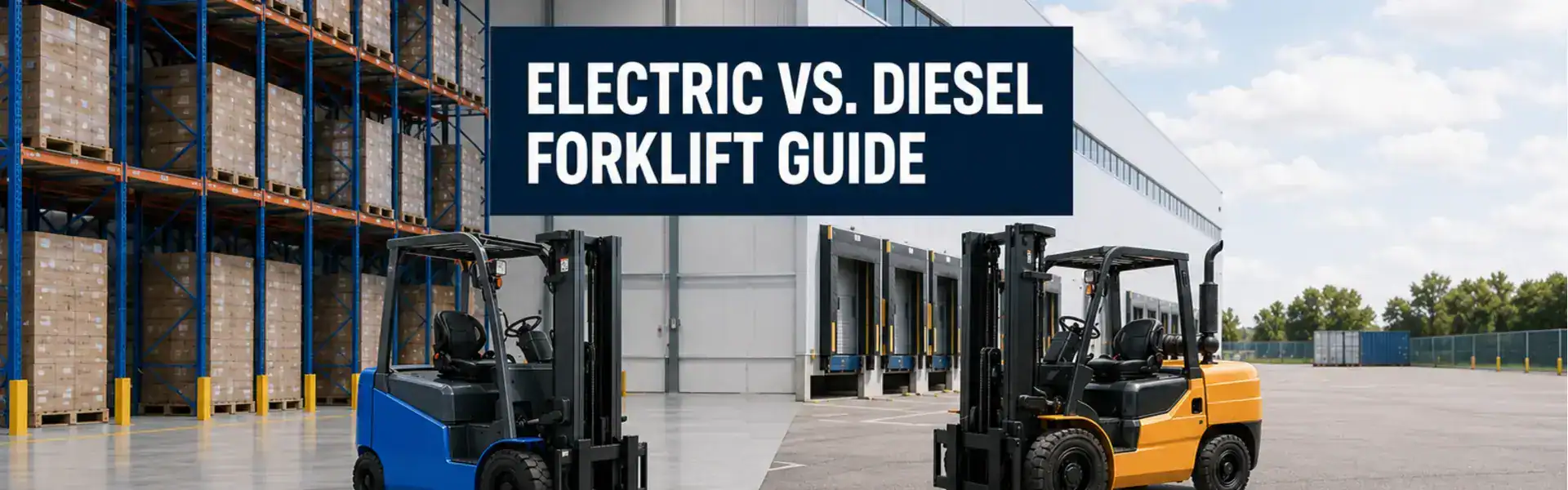
Do not make the decision from indoor-versus-outdoor use alone. Modern electric forklifts can handle demanding loads and suitable paved outdoor routes, while a standard diesel industrial forklift is not automatically a rough-terrain machine. Compare the actual load, surface, weather exposure, shifts, charging or refueling plan, ventilation, maintenance resources, destination requirements, and full ownership cost before selecting the power system.
Electric vs. Diesel Forklift at a Glance
The table below is a class-level decision guide, not a substitute for a model-specific specification. Capacity, mast, tires, protection, battery or engine, and attachments can change the conclusion.
| Decision factor | Electric forklift | Diesel forklift | What the buyer must verify |
|---|---|---|---|
| Enclosed work | No tailpipe exhaust at the point of use and relatively low operating noise | Exhaust and noise create ventilation and workplace restrictions | Local rules, air-quality controls, hygiene zones and traffic conditions |
| Outdoor work | Can suit firm, level surfaces when the model and protection are approved for the exposure | Commonly selected for outdoor yards and longer duty periods | Surface, gradients, rain, dust, temperature, traction and ground clearance |
| Energy availability | Needs compatible site power, charger capacity and planned charging windows | Needs safe fuel supply, storage and fast refueling access | Peak demand, shifts, breaks, site utilities and energy logistics |
| Maintenance profile | Fewer engine-related service items, but battery, charger and electrical systems still require care | Engine, fuel, cooling, air-intake and exhaust systems add service tasks | Local technicians, parts, preventive-maintenance plan and downtime response |
| Purchase and infrastructure | Truck price must include battery, charger and any electrical installation | Truck price must include the correct engine and any fuel-storage or handling requirements | Comparable delivered configurations, not bare-truck prices |
| Operating cost | Often benefits from lower energy and routine service cost, depending on local rates and utilization | Fuel and engine servicing can increase cost, but fast refueling may protect uptime | Local energy prices, measured consumption, labor and lost production |
| Heavy capacity | Available in high-capacity classes; power type alone does not define lifting ability | Widely available for heavy outdoor and industrial applications | Capacity at the actual load center, height and attachment configuration |
Start with the Conditions That Can Eliminate One Option
A good comparison begins with non-negotiable constraints, not a list of advantages. If a truck will spend long periods inside an enclosed area, diesel exhaust may make a diesel configuration impractical regardless of purchase price. If the site has no suitable electrical supply and cannot create a safe charging routine, an electric truck may not support the required availability without additional infrastructure.
Indoor air, noise and controlled environments
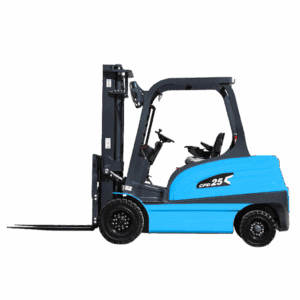
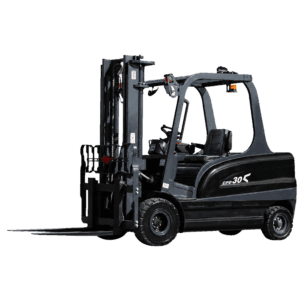
Electric forklifts produce no exhaust at the truck during operation. This makes them a practical starting point for enclosed warehousing, manufacturing, food handling and other areas where local emissions are a concern. They are also quieter than internal-combustion trucks, which can improve communication and reduce background noise. These advantages do not remove the need for ventilation, pedestrian controls, operator training or a correctly equipped charging area.
Diesel equipment should not be treated as an ordinary indoor substitute. Any proposed indoor use requires a site-specific review of ventilation, exposure, operating duration and applicable rules. Running a diesel truck briefly through a large ventilated transfer zone is a different condition from using it continuously inside a confined warehouse or trailer.
Surface and weather exposure
Outdoor use does not automatically require diesel power. An electric counterbalanced forklift may work on a maintained paved yard when its tires, electrical protection, traction, temperature range and weather exposure are appropriate. The buyer should obtain written confirmation for the expected conditions rather than assuming that every electric model is weatherproof.
Diesel forklifts are frequently selected for outdoor loading and longer routes, but chassis type matters as much as engine type. Loose gravel, mud, deep potholes, steep gradients and construction ground may exceed the intended conditions of a standard industrial diesel truck. When uneven ground is the defining problem, compare a purpose-built rough-terrain forklift instead of treating diesel power as the solution by itself.
Match the Power System to the Real Duty Cycle
Ask how the truck works across a complete day: hours per shift, number of shifts, loads per hour, travel distance, lift height, idle time, peak periods and planned breaks. A truck used intermittently in receiving has a different energy requirement from one feeding a production line for three shifts.
Electric availability depends on the energy plan
An electric forklift should be selected as a system consisting of the truck, battery, charger, site electrical supply and charging schedule. Battery chemistry affects routine maintenance and charging behavior. Lead-acid and lithium-ion options should be evaluated against the exact model, working hours and site procedure rather than compared from a generic list.
For one predictable shift with a long idle period, overnight charging may be straightforward. Multi-shift work may require a larger battery, opportunity charging, spare batteries, a battery-change process or additional trucks. The final plan must identify charger input voltage, frequency and phase; available charging time; charging location; ambient temperature; and expected work per shift. An ampere-hour figure alone does not prove that the truck will complete the duty cycle.
Diesel availability depends on fuel and service access
Diesel refueling can be completed more quickly than a full battery charge, which can favor operations with limited breaks, remote work or unpredictable peaks. That advantage exists only when compliant fuel storage, delivery and refueling procedures are practical. Fuel quality, cold conditions, contamination control and operator behavior can also affect availability.
Long operating hours do not automatically make diesel the winner. If an electric fleet can charge during scheduled breaks and delivers the required output, its lower routine energy and maintenance burden may outweigh the charging constraint. Compare productive uptime across the whole shift, including fueling, charging, service and unplanned interruptions.
Do Not Use Power Type as a Shortcut for Capacity
The claim that diesel forklifts are always stronger is too broad for a purchasing decision. Both power systems are available in multiple capacity classes. Anxing publishes electric forklift classes from compact warehouse trucks through a 10,000 kg model, while its diesel range covers 2,000 to 10,000 kg classes. The correct comparison is between two complete trucks rated for the same load, load center, lift height and attachment.
Start with the forklift capacity, height, power and aisle selection process. Record the heaviest load including pallet or fixture, its length in the fork direction, weight distribution, required lift height and every attachment. Request permitted capacity at the actual height and load center. A nominal 3-ton electric truck and a nominal 3-ton diesel truck can both be wrong if an attachment moves the load forward or the top rack requires reduced residual capacity.
Travel speed, gradeability and lifting speed should come from the quoted configuration, not be inferred from motor or engine power. For a grade, provide its slope, length, surface, load and travel direction. Operation must remain within the manufacturer’s instructions and site rules.
Compare Total Cost per Productive Hour
Purchase price is only one line in the ownership model. Compare the same evaluation period and the same required output. A useful total-cost calculation includes:
- delivered truck, battery or engine, charger, forks, mast, tires and attachments;
- electrical installation and charging area, or fuel storage and handling facilities;
- electricity or diesel consumed under the expected duty cycle;
- planned maintenance labor, fluids, filters, wear parts and periodic inspections;
- battery replacement provision or major engine and exhaust-system service;
- tires, brakes, hydraulic components and other items common to both truck types;
- downtime, backup equipment, missed production and service response;
- operator training, required documents, insurance and local compliance costs;
- residual value or disposal cost at the end of the evaluation period.
Use local energy data instead of internet averages. Annual electric energy cost can be estimated from measured or supplier-supported kilowatt-hours per working cycle multiplied by annual cycles and the local electricity tariff. Annual diesel cost can be estimated from liters per operating hour multiplied by annual hours and the delivered fuel price. Add demand charges or time-of-use tariffs where they apply. Then test higher and lower utilization and energy-price scenarios.
Convert ownership cost into cost per productive hour or cost per pallet movement. This prevents a low-use truck and a high-throughput production truck from being judged by the same annual number. It also exposes downtime: a cheaper truck is not cheaper if its energy routine or service delays stop the operation.
Plan Maintenance Around the Technology You Can Support
Electric forklifts remove many engine-related service items, but they are not maintenance-free. Batteries, chargers, cables, connectors, controls, drive motors, hydraulics, brakes, steering, tires, forks, mast rollers and chains still require inspection and service. Lead-acid batteries add watering, cleaning and charging-area procedures; lithium systems require compatible charging and battery-management practices.
Diesel forklifts add engine oil, filters, cooling, fuel injection, air intake, belts and exhaust-related components to the maintenance plan. Dusty yards and poor fuel quality can increase attention to filtration and contamination. The buyer should confirm the engine configuration, service intervals, diagnostic requirements and locally available parts before ordering.
Compare more than scheduled service frequency. Ask who can diagnose the controller or battery system for an electric truck and who can support the selected diesel engine locally. Require manuals, parts references and an agreed warranty-claim process for the exact configuration. A familiar technology with strong local support can produce more uptime than a theoretically lower-maintenance system that no technician can service.
Include the Operator and Facility in the Decision
Lower noise and smooth low-speed response can suit busy indoor routes, while diesel noise, heat and vibration may affect comfort and communication. Compare cab options, visibility, seat, controls, steering and access directly.
Charging and refueling create different facility risks. Battery charging needs a designated procedure and equipment matched to the battery technology. Fuel handling needs appropriate storage, spill control, fire precautions and site authorization. Neither power source removes the obligation to train operators, inspect the truck, separate pedestrians and follow the supplied manual and local rules.
Check Destination and Site Requirements Before Ordering
Power choice can change the documents and components required for the destination. A diesel forklift’s engine model, emissions label, engine family or conformity evidence may be important for import and registration in a particular market. Do not assume that an engine available for one destination can be shipped to another. Confirm the destination country before approving the engine.
Electric trucks also require market-specific checks, including charger input, plug or connector, electrical documentation, battery transport information and any required conformity records. If the truck is being imported, use a configuration-controlled process from quotation through inspection and shipping; the forklift import buyer’s checklist explains the information that should remain consistent.
Explosive atmospheres, unusually corrosive sites, freezers and other special environments require separately approved equipment. Standard electric and diesel trucks should not be assumed suitable because one power source appears safer in general.
Which Forklift Fits Common Operating Scenarios?
Enclosed warehouse with one or two predictable shifts
Electric is normally the first option to investigate. Confirm working aisle, floor, load, mast, battery capacity, charging windows and site power. Buyers can compare the Anxing electric forklift range and the broader warehouse and material handling solution against the real route.
Paved loading yard with mixed indoor and outdoor travel
Electric may still be preferable if outdoor exposure is controlled and indoor travel is frequent. Diesel may fit if the work is predominantly outside and rapid refueling is critical, but the indoor portion must be reviewed. Some operations use an outdoor diesel truck and transfer loads to an electric truck at the building boundary.
Remote outdoor site with long, irregular operating periods
Diesel is often the practical starting point when grid capacity and charging time are unavailable. Verify fuel logistics, engine compliance, surface, grade, tire type and service access. If the ground is loose or deeply uneven, move the comparison to rough-terrain equipment.
Heavy industrial load on a controlled floor
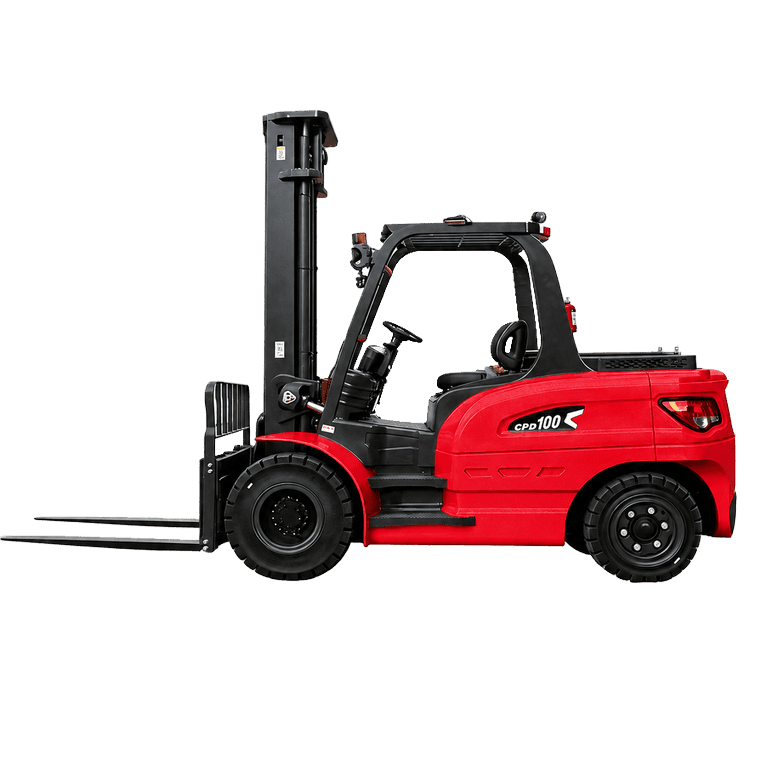
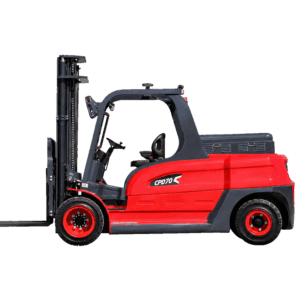
Do not reject electric without checking the required class. The published Anxing 10 ton electric forklift shows that high capacity exists in battery-electric form. Compare floor loading, route dimensions, charging infrastructure, load center and attachments against an equivalent diesel configuration before deciding.
Use Verified Anxing Ranges for the Initial Shortlist
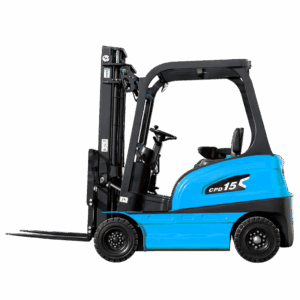
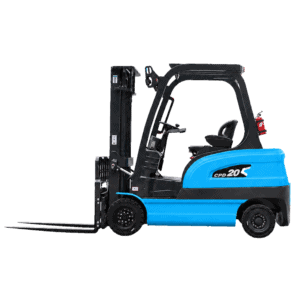
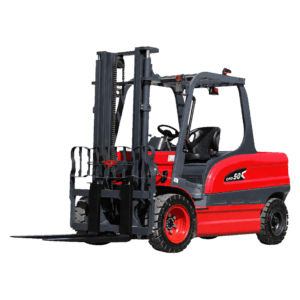
For common warehouse and yard loads, the 1.5–3.5 ton electric forklift range offers rated-capacity classes from 1,500 to 3,500 kg with a listed 3,000 mm standard lift height. It is a starting point for compatible warehouse, factory and paved material-handling routes where a charging plan can be established.
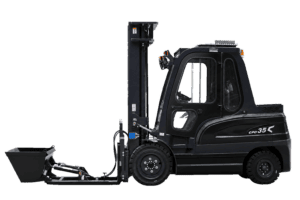
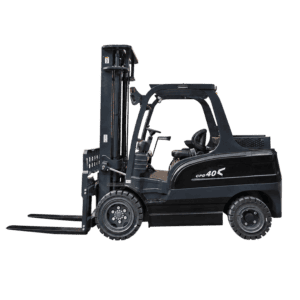
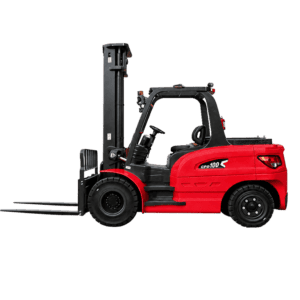
The 2–3.5 ton diesel forklift range covers 2,000 to 3,500 kg rated capacities at a 500 mm load center, with a listed 3,000 mm standard lift. It is a starting point for outdoor loading and industrial handling where the surface, engine configuration and destination requirements are suitable.
These ranges overlap in capacity, which allows the power choice to be made from the operation rather than tonnage alone. The final quotation should state the exact model, rated load center, capacity at the required height, mast, forks, attachment, tires, battery and charger or diesel engine, overall dimensions and operating limits.
A Practical Electric-or-Diesel Selection Workflow
- Define the load. Record maximum weight, dimensions, load center, pallet or fixture, stability, lift height and attachments.
- Map the complete route. Separate enclosed, covered and outdoor zones; measure aisles, doors, turns, gradients and overhead restrictions.
- Classify the surface. Identify smooth concrete, maintained pavement, gravel, broken ground, mud, dock plates and thresholds.
- Document the duty cycle. Provide hours, shifts, loads per hour, travel distance, lift cycles, idle time, breaks and peak periods.
- Test the electric plan. Confirm site power, charger input, charging location, time windows, battery strategy and temperature conditions.
- Test the diesel plan. Confirm fuel supply, refueling process, ventilation boundaries, engine support, emissions requirements and site restrictions.
- Compare matched models. Use the same load, mast, forks, tires and attachments rather than comparing two generic tonnage labels.
- Build a local TCO model. Include delivered equipment, infrastructure, energy, maintenance, downtime, major replacements and residual value.
- Validate support and documents. Confirm manuals, parts, service capability, warranty procedure and destination-specific records in writing.
- Freeze the final configuration. Make the approved specification the reference for production, inspection, shipment and acceptance.
Common Buying Mistakes
Assuming every outdoor job needs diesel
This overlooks paved mixed-use sites where an approved electric configuration may reduce indoor emissions and routine operating cost. Define weather and surface exposure before deciding.
Assuming every diesel forklift is rough-terrain equipment
Engine type does not establish four-wheel drive, ground clearance, tires or stability on uneven ground. Compare the chassis to the route.
Comparing purchase prices without batteries, chargers or engines
Require complete delivered configurations and identify infrastructure separately. Otherwise the cheaper quotation may simply exclude a necessary component.
Choosing from average daily hours
Average utilization can hide shift peaks. Use the most demanding credible day and test whether charging, refueling and maintenance fit around it.
Ignoring destination compliance until shipment
The diesel engine or electrical configuration may affect import eligibility and required records. Confirm the destination and applicable requirements before the deposit.
What to Send for an Electric vs. Diesel Forklift Recommendation
Send the same operating data to every supplier so the quotations are comparable:
- maximum and typical load weight, dimensions, load center and pallet type;
- required lift height, rack level, lowered mast limit and attachments;
- indoor and outdoor percentages, ventilation constraints and noise-sensitive zones;
- floor and yard surfaces, gradients, weather, dust, temperature and moisture;
- working aisle, cross aisle, doorway and turning-space dimensions;
- hours per shift, shifts per day, pallet moves, travel distance and peak workload;
- site voltage, frequency, phase, charging location and available charging windows;
- diesel availability, refueling process and local engine-service capability;
- local electricity and delivered diesel prices for the TCO comparison;
- required tires, forks, side shift, fork positioner, cabin or other options;
- quantity, destination country, port or city, and required documents.
Ask for two configuration-specific quotations when both power systems remain feasible. Compare capacity at height, dimensions, working aisle, energy system, maintenance scope, destination documents and five-year or other agreed evaluation assumptions. The better forklift is the one that completes the measured job reliably within the site’s constraints—not the one that wins a generic electric-versus-diesel argument.