01
Access & Site Assessment
Measure gates, passages, overhead clearance, slopes, turning areas, and transport access. Review the soil, finished surfaces, buried services, edges, and ground-bearing condition before deciding machine size or mobility.
Tell us your needs,
we'll provide the
perfect solution.
Leave your information and our team will get back to you shortly.
This site is protected by reCAPTCHA and the Google Privacy Policy and Terms of Service apply.
Industry Solution · Construction & Landscaping
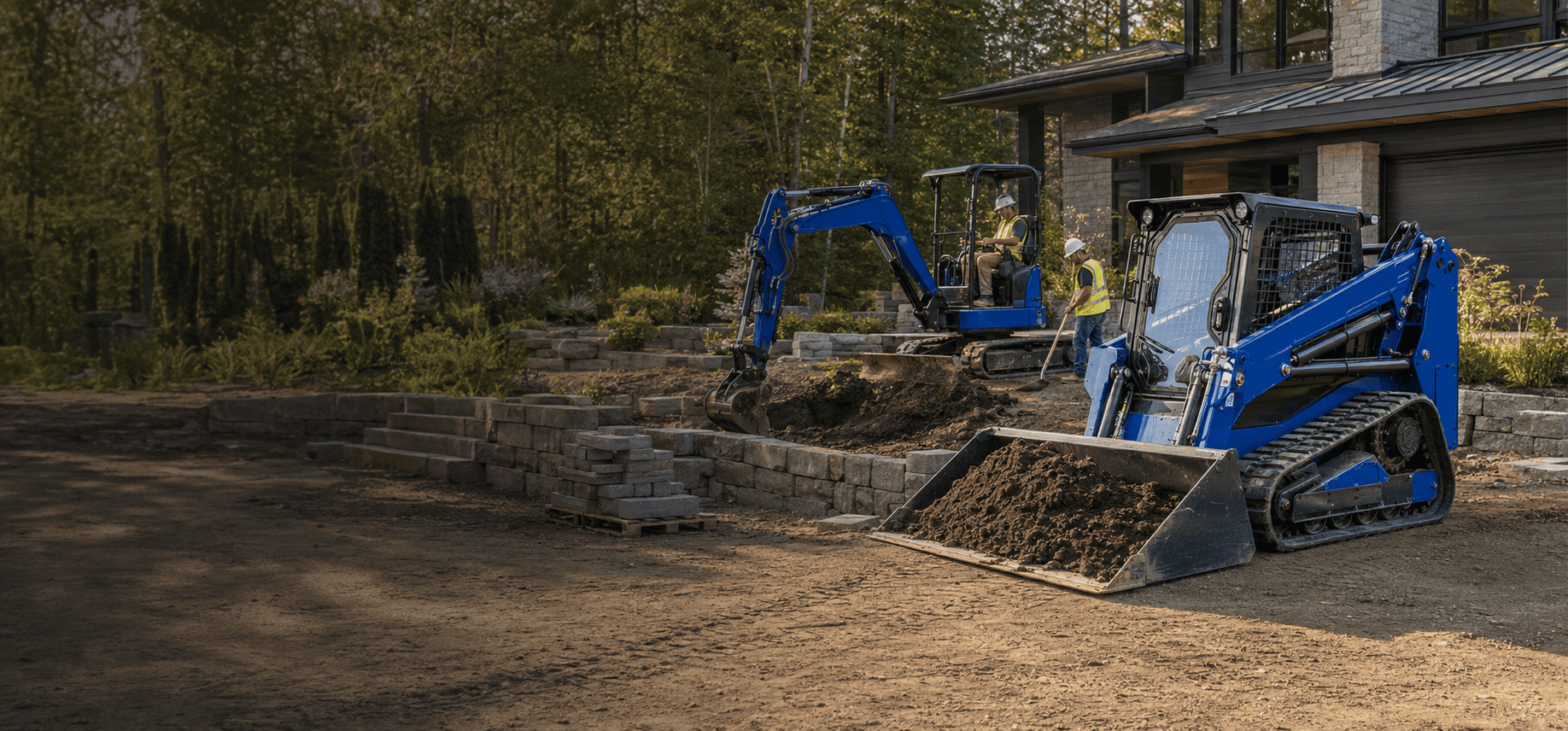
Complete excavation, trenching, site preparation, material placement, landscaping, and elevated installation work with equipment selected around the real jobsite. Anxing Machinery helps contractors, landscapers, rental companies, distributors, and professional buyers compare mini excavators, rough-terrain forklifts, diesel forklifts, and scissor lifts by task, access, ground condition, capacity, working height, and transport limits.
A productive solution does not begin with the largest engine or the lowest machine price. It begins with what must be dug, lifted, moved, or installed; how confined the site is; what the ground can support; and how the machine will reach the project. Share these conditions with us, and an Anxing representative will help you build a practical equipment specification before you order.
Start With the Work
Construction and landscape projects often combine several different tasks. Dividing the project into work stages makes it easier to select the right machine and avoid expecting one machine to do everything.
01
Measure gates, passages, overhead clearance, slopes, turning areas, and transport access. Review the soil, finished surfaces, buried services, edges, and ground-bearing condition before deciding machine size or mobility.
02
Dig foundations, drainage channels, irrigation trenches, utility lines, tree pits, and landscape features. Digging depth, reach, breakout force, tail swing, machine width, and attachment requirements guide excavator selection.
03
Move palletized blocks, pavers, timber, pipe, bagged material, and other supplies from the delivery point to a safe staging area. Load weight, load center, lift height, terrain, gradient, and route width must be verified.
04
Backfill trenches, shape soil, spread material, remove spoil, and prepare areas for paving or planting. Bucket type and operator technique matter, but high-volume loading or precision grading may require dedicated equipment outside this product range.
05
Raise workers, tools, and materials vertically for cladding, electrical, HVAC, lighting, sprinkler, painting, and finishing tasks. Working height, platform capacity, ground, access width, wind rating, and power source determine the suitable lift.
Common Jobsite Challenges
Residential side passages, garden gates, walls, existing buildings, and narrow urban plots can limit machine width and swing space. Overall width, folded dimensions, tail-swing design, and transport route should be checked before excavator capacity.
Mud, loose soil, gravel, turf, slopes, excavated edges, and newly filled areas can affect traction and stability. A machine described as rough-terrain still requires a firm, assessed operating route and must remain within its stated operating limits.
Attachments can expand a mini excavator from trenching to drilling, breaking, grading, or material gripping. However, attachment weight, hydraulic flow, pressure, coupler, piping, and carrier stability must all be compatible.
Nominal fork capacity alone does not confirm suitability. Long blocks, pipes, pavers, timber, and suspended or irregular loads change the load center and may reduce usable capacity at height.
Established lawns, paving, indoor slabs, and completed floors may require lower ground pressure, appropriate tracks or tires, controlled turning, and protection measures. The route must support the machine plus its load.
Platform height is only one selection factor. Surface firmness, level tolerance, potholes, grades, wind, platform load, access width, outriggers, indoor or outdoor rating, and required outreach must also be evaluated.
Equipment Selection Guide
Use this table as a first filter. Final suitability depends on the specifications of the individual model, the attachment or load, the operating environment, and local requirements.
| Primary Need | Recommended Equipment | Typical Applications | Check Before Ordering |
|---|---|---|---|
| Digging, trenching, demolition support, holes, and confined earthwork | Mini Excavator | Residential construction, utility trenches, drainage, irrigation, hardscaping, tree planting, and site cleanup | Operating weight, width, digging depth, reach, dump height, tail swing, undercarriage, auxiliary hydraulics, and transport weight |
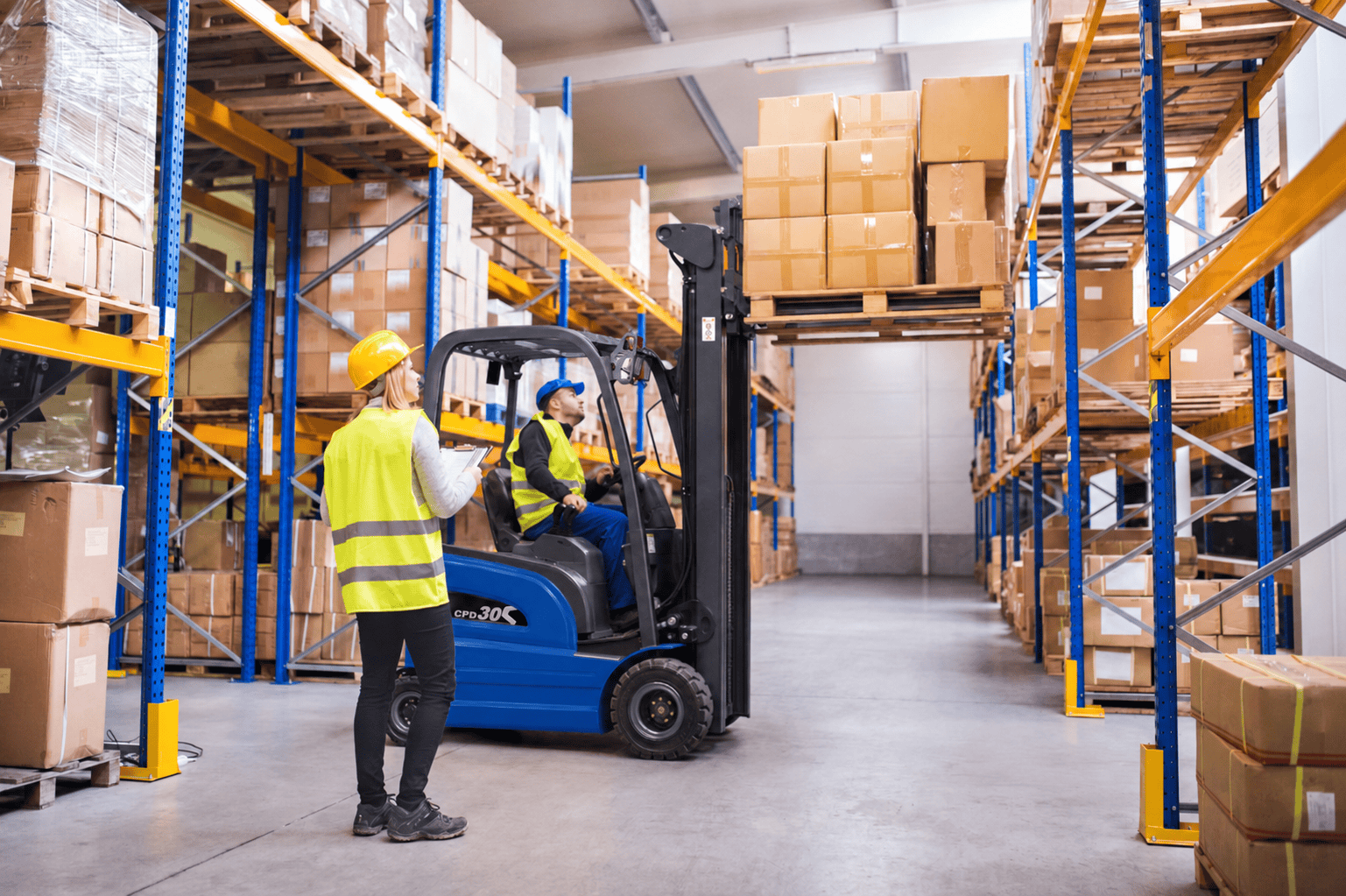
| Moving palletized materials across uneven or unpaved jobsite routes | Rough Terrain Forklift | Blocks, pavers, timber, pipe, bagged materials, and site supplies on gravel or compacted ground | Load center, residual capacity, ground condition, slope, tire type, ground clearance, turning space, and lift height |
| Outdoor material-yard handling on firm, relatively level surfaces | Diesel Forklift | Building-material yards, precast yards, contractor depots, and project staging areas | Surface quality, ventilation, emissions rules, mast clearance, tire type, maneuvering room, and load dimensions |
| Vertical access for installation, finishing, inspection, or maintenance | Scissor Lift | MEP installation, cladding, painting, lighting, ceilings, fire systems, exterior finishing, and facility work | Working height, platform capacity, access width, indoor or outdoor use, ground, gradeability, wind rating, and power source |
Recommended Product Solutions
01
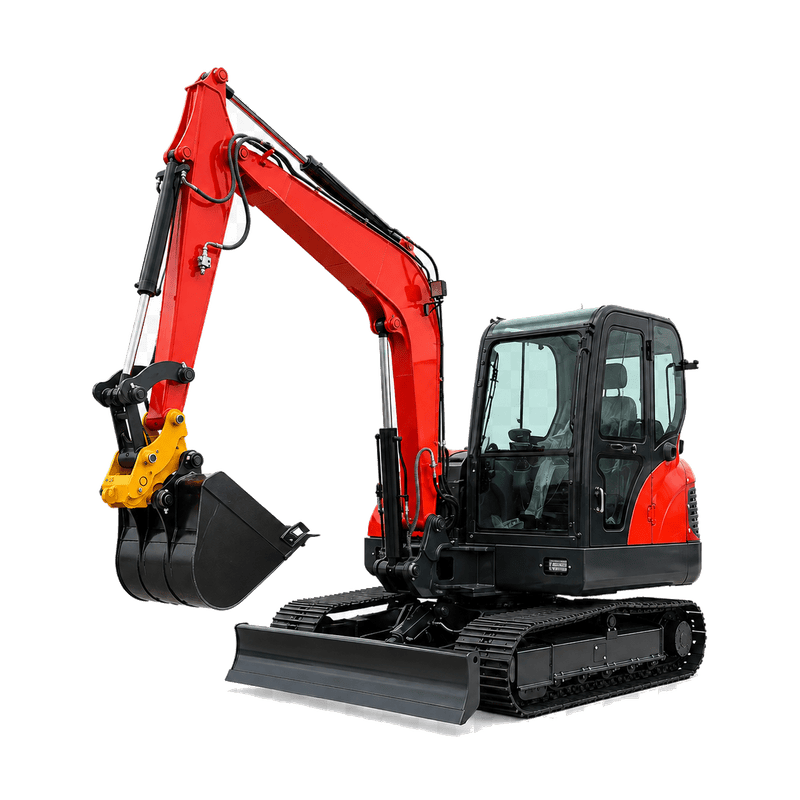
Anxing mini excavators are the core option for digging and trenching where a full-size excavator would be difficult to transport or maneuver. Their compact dimensions suit residential plots, urban construction, garden renovation, utility repair, small foundations, drainage, irrigation, and other space-restricted projects.
A bucket supports general excavation and backfilling, while compatible attachments can extend the carrier into auger drilling, hydraulic breaking, grading, gripping, and site-clearing work. Attachment availability and compatibility vary by model and must be confirmed before ordering.
Selection note: Do not choose only by bucket capacity or operating weight. Send the required digging depth, trench width, dumping requirement, soil or material type, narrowest access point, slope, attachment plan, working hours, and transport limits. A compact machine can enter a narrow site, but it still needs adequate working clearance and stable ground.
Explore Mini Excavators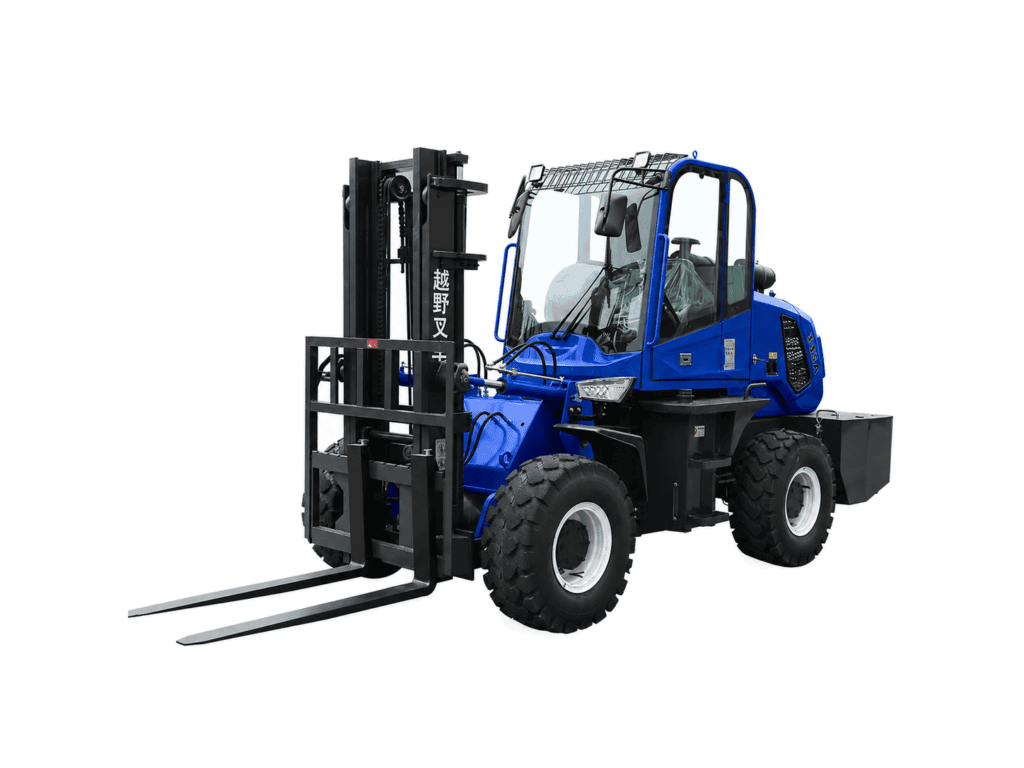
02
Anxing rough-terrain forklifts are designed for palletized materials that must move beyond a smooth warehouse floor. They are a practical starting point for delivering blocks, pavers, bagged cement, timber, pipe, landscaping materials, and site supplies across gravel, compacted soil, or uneven outdoor routes.
Compared with a conventional warehouse forklift, a rough-terrain model places greater emphasis on ground clearance, traction, tires, and outdoor mobility. It is still a forklift: its main job is controlled load handling, not excavation, earthmoving, or unrestricted travel over unstable ground.
Selection note: Share the real load weight, dimensions, center of gravity, fork entry, maximum lift height, route width, slopes, surface photographs, soft areas, overhead restrictions, and required quantity. Capacity at the required height and load center matters more than the headline rated capacity.
Explore Rough Terrain Forklifts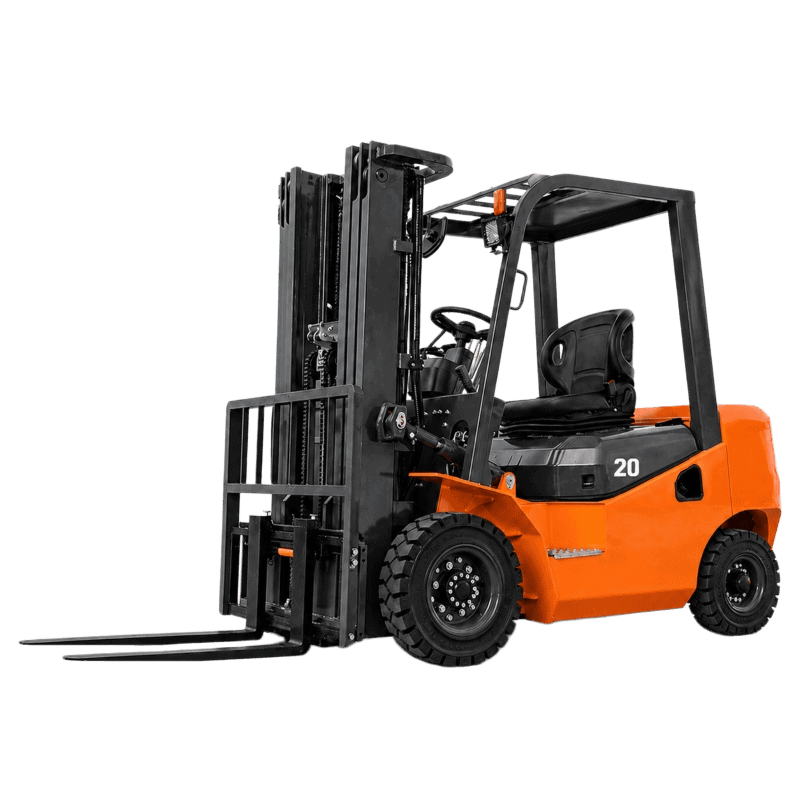
03
Anxing diesel forklifts can support frequent handling in building-material depots, precast yards, contractor warehouses, and jobsite staging areas where surfaces are firm, relatively level, and suitable for a conventional pneumatic-tire forklift.
They offer a practical route for sustained outdoor work and quick refueling, but they should not automatically be treated as rough-terrain forklifts. Deep mud, loose fill, severe ruts, large holes, and significant slopes may be outside the intended operating environment of a standard diesel counterbalanced model.
Selection note: Confirm whether the machine will enter buildings or enclosed areas. Exhaust, ventilation, noise, fire, and local emissions requirements must be reviewed by the buyer. If the route is genuinely uneven or unpaved, compare a rough-terrain model instead.
Explore Diesel Forklifts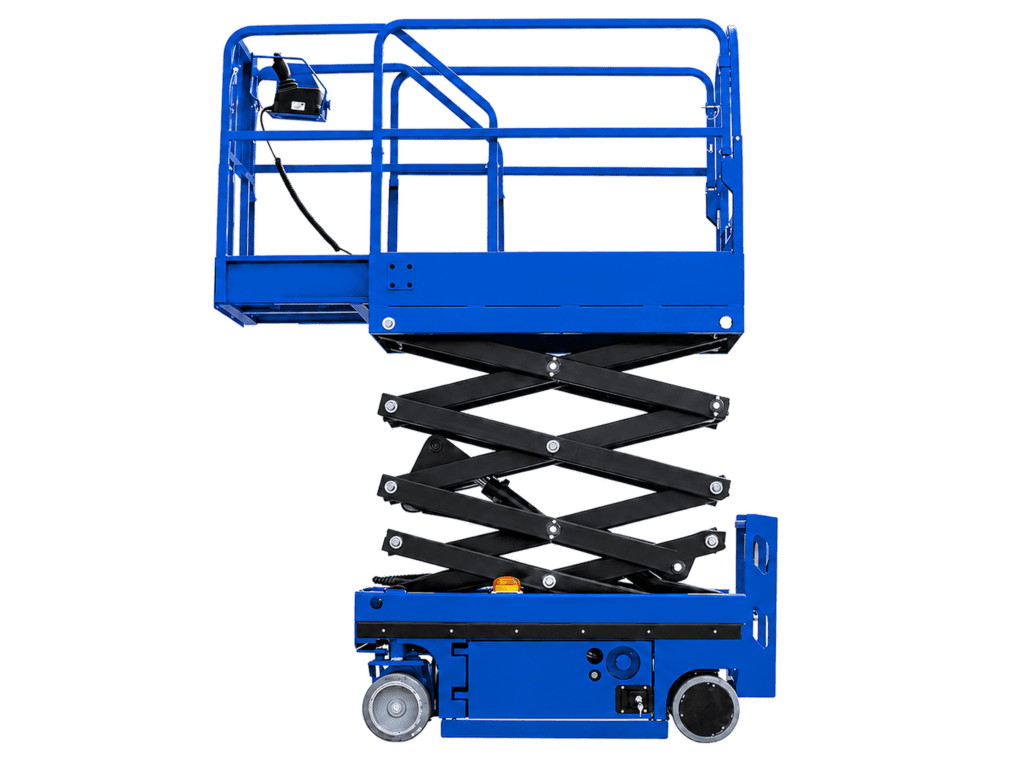
04
Anxing scissor lifts provide a stable work platform for personnel, tools, and materials when the task is mainly above the machine. Typical work includes electrical and HVAC installation, sprinkler systems, ceilings, lighting, wall panels, cladding, painting, windows, inspection, and building maintenance.
Electric slab-type lifts are generally considered for firm, level floors and low-noise work, while rough-terrain configurations are intended for more demanding outdoor access. Exact indoor or outdoor suitability, maximum wind rating, drive-height rules, slope limits, and stabilizer requirements depend on the selected model.
Selection note: Working height is not the same as platform height. Also send the required platform load, number of occupants, access-door width, floor or ground condition, slope, indoor or outdoor use, wind exposure, power preference, and any requirement for extension decks or outriggers. If the task requires substantial horizontal outreach or reaching over obstacles, a scissor lift may not be the correct machine type.
Explore Scissor LiftsTypical Solution Packages
These examples show how machines can be divided by task. The final configuration should be based on the specific site, model specifications, applicable regulations, and operator requirements.
Typical starting point: Mini excavator
Use a compact excavator for foundation trenches, drainage, water lines, cable routes, backfilling, and limited demolition. Prioritize access width, tail swing, digging depth, transport weight, and compatible buckets or breakers.
Typical starting point: Mini excavator + rough-terrain forklift when palletized materials are involved
The excavator handles pits, irrigation trenches, soil shaping, old-feature removal, and backfilling. A rough-terrain forklift can stage pallets of pavers, plants, blocks, or bagged materials where the assessed route permits.
Typical starting point: Diesel forklift on firm yards or rough-terrain forklift on uneven routes
Select by the worst regular surface, real load center, lift height, and route. A standard diesel forklift is efficient on suitable yards; a rough-terrain model is the more appropriate comparison when materials must enter an unpaved site.
Typical starting point: Scissor lift
Use a compatible electric lift for ceilings, lighting, MEP systems, sprinklers, painting, and finishing on firm level floors. For outdoor shell work, compare a model specifically rated for the ground, environment, and wind conditions.
Typical starting point: Mini excavator + scissor lift
This pairing separates ground work from vertical access. Choose sizes that match the contractor’s common jobs, towing or transport arrangements, storage, service capability, and operator training rather than buying for an occasional extreme task.
Typical starting point: Popular compact sizes with controlled option packages
Rental buyers should prioritize easy operation, transportability, service access, wear-part availability, attachment compatibility, fleet consistency, and clear pre-rental inspection procedures. Anxing can review model mixes for different customer segments.
Selection Boundaries
Good equipment advice also means identifying work that falls outside the machine’s strongest application.
A mini excavator can dig, backfill, place material, and load within its working envelope. For continuous stockpile loading, long-distance carrying, or rapid grading, a skid-steer, compact track loader, or wheel loader may be more productive.
A rough-terrain forklift needs an assessed route. Soft edges, severe side slopes, unstable fill, deep mud, holes, and elevated loads can create unacceptable stability risks even when the truck has off-road tires or four-wheel drive.
A scissor lift is strongest when the work is primarily vertical. If workers must reach over machinery, walls, structures, or other obstacles, an appropriate boom-type platform may be required instead.
Fork attachments, excavator tools, extension decks, and other options add weight or change geometry. The complete machine-and-attachment combination must be checked against the required load and working condition.
Information for Correct Selection
You do not need to know the final model number. The following application data allows our team to narrow the equipment and configuration more accurately.
| Equipment | Essential Information | Useful Site Evidence |
|---|---|---|
| Mini Excavator | Work type, material or soil, digging depth, trench width, reach, dump height, access width, attachments, hours per day, and transport limit | Gate and passage measurements, site photos, slope photos, trench drawing, and transport vehicle details |
| Rough-Terrain or Diesel Forklift | Maximum load weight and dimensions, load center, lift height, fork requirement, route width, surface, gradient, duty cycle, and fuel preference | Load photos, route video, soft-ground areas, overhead clearance, delivery vehicle, and storage conditions |
| Scissor Lift | Required working height, platform load, occupants, indoor or outdoor use, floor or terrain, access width, slope, wind exposure, and power preference | Work-area photos, entry dimensions, floor details, obstacles, overhead hazards, and charging or fueling conditions |
| Distributor or Rental Order | Target customers, destination market, expected quantity, popular applications, preferred specifications, branding, documentation, parts, and warranty plan | Current product range, competitor models, local compliance needs, and forecast by model or capacity |
Configuration & Procurement Support
Available configurations vary by product and model. Anxing reviews technical feasibility, order quantity, destination requirements, and intended use before confirming any option.
We can review machine size, power system, tires or tracks, mast or platform arrangement, cab or canopy, auxiliary lines, compatible attachments, chargers, and other model-dependent options.
Color, labels, decals, identification plates, manuals, packaging marks, and other branding requirements can be evaluated for qualifying orders through our OEM & ODM service.
Tell us the destination country and required documents at the beginning of the project. Buyers can also review the overview on our Certifications page.
For distributors, contractors, and rental fleets, we can discuss initial spare-parts packages, common wear items, service information, and repeat-order support for the selected equipment.
How We Work With Buyers
Send the task, site conditions, dimensions, required capacity or working height, destination country, quantity, preferred options, and available photos or videos.
We review which Anxing equipment category fits the main task and identify important selection boundaries, configuration questions, or missing application data.
Both sides confirm the model, key parameters, attachments or options, quantity, documentation, spare-parts needs, and commercial terms before the order proceeds.
The equipment is prepared according to the confirmed order requirements. Applicable checks and documentation depend on the product, agreed specification, and destination.
We coordinate the agreed packing, loading, and transport documents. Visit Shipping & Delivery for an overview of the export process.
Our team provides the agreed manuals, operating guidance, parts support, and remote assistance. See After-Sales Service for more information.
Why Anxing Machinery
We ask how and where the machine will work before recommending a product, helping buyers compare equipment around actual tasks instead of isolated specifications.
Mini excavators, rough-terrain forklifts, diesel forklifts, and scissor lifts cover different stages of ground work, material handling, and vertical access within one sourcing conversation.
We consider configuration consistency, documentation, branding, packing, spare parts, and repeat-order requirements for distributors, importers, contractors, and rental fleets.
Our service support covers agreed packing, shipping coordination, documentation, manuals, remote guidance, and spare-parts assistance.
Learn more about Shandong Anxing Machinery Co., Ltd. and the team supporting your project.
Related Solutions
If materials also move through warehouses, production areas, loading docks, or delivery vehicles, compare electric forklifts, stackers, diesel forklifts, and other handling options.
View Warehouse SolutionsFor a deeper comparison of scissor-lift applications, working heights, platform capacity, indoor and outdoor conditions, and access requirements, visit our dedicated solution.
View Work at Height SolutionsImportant Operating Note
Equipment recommendations on this page are general purchasing guidance, not a substitute for the operator’s manual, rated-capacity information, jobsite risk assessment, local law, or approved training. Before operation, the responsible party must assess ground support, slopes, excavations, edges, buried and overhead services, traffic, pedestrians, weather, visibility, machine condition, load stability, attachments, and exclusion zones. Use only approved lifting points and compatible attachments. Never use an excavator bucket or forklift forks to lift personnel. Mobile elevating work platforms must be selected, inspected, and operated according to the manufacturer’s instructions and applicable local requirements.
Frequently Asked Questions
The right size depends on access width, transport limit, required digging depth and reach, soil, attachment, dump height, slope, and daily workload. A smaller machine may enter a confined garden more easily, while a larger compact model may provide greater digging and lifting performance. Send the narrowest access measurement and the deepest required excavation so Anxing can help narrow the options.
Depending on the model, possible tools may include different buckets, augers, hydraulic breakers, thumbs or grabs, rakes, and grading attachments. Compatibility must be checked by carrier weight, coupler or pin dimensions, attachment weight, hydraulic flow and pressure, auxiliary piping, and intended task. Do not assume that an attachment fitting the arm is safe or productive for the carrier.
A diesel counterbalanced forklift can be suitable for outdoor material yards and project areas with firm, relatively level surfaces. A rough-terrain forklift is the more appropriate starting point when loads must cross gravel, compacted soil, uneven routes, or unpaved ground. The final choice depends on the load, load center, lift height, route, slope, ground strength, clearance, and turning room.
Rough-terrain capability does not make every muddy or sloped area safe. Deep mud, soft fill, holes, edges, and side slopes can reduce traction or stability. The route must be assessed against the limits in the selected model’s manual, and loads should never be elevated or carried in a way that exceeds those limits. Send site photos and gradient information for a preliminary review.
An electric slab-type scissor lift is generally considered for firm, level floors where compact access, low noise, and no exhaust emissions at the point of use are important. A rough-terrain configuration is intended for more demanding outdoor access. Model-specific indoor or outdoor ratings, wind limits, gradeability, ground requirements, outriggers, platform capacity, and working height must be confirmed before selection.
A scissor lift mainly provides vertical elevation and only limited deck extension. If the work area cannot be approached from directly below or nearby, or if the operator must reach over a wall, machine, roof edge, or other obstacle, a suitable boom-type platform may be required. Do not bridge the gap with planks, ladders, or improvised platform extensions.
Send the main task, required digging depth, load capacity or working height, site access dimensions, surface and slope, soil or material, attachments, operating hours, transport limits, destination country, quantity, and preferred options. Photos, short videos, drawings, load details, and the narrowest access measurements help us make a more useful recommendation.
Model-dependent configurations, color, labels, branding, manuals, attachments, spare-parts packages, and other OEM or ODM requirements can be reviewed according to technical feasibility, quantity, destination, and application. Visit our OEM & ODM page and share your target market and proposed model mix.
For general purchasing, delivery, payment, operation, and service questions, visit the Anxing FAQ.
Tell Us About the Task and the Site
You do not need to select the model before contacting us. Send the work type, access dimensions, digging depth, load or working height, terrain, slope, attachment requirements, operating hours, destination country, and quantity. An Anxing representative will help you compare the suitable options and confirm the next steps.