
01
Inbound Receiving
Unload palletized components, packaging, consumables, molds, and raw materials. We check truck or container access, dock plates, load weight, fork entry, unloading frequency, and the route into the factory.

Quick Quote
Share the product type, quantity, working conditions and destination. Anxing Machinery will use your details to prepare the next step.
Industry Solution · Manufacturing & Production
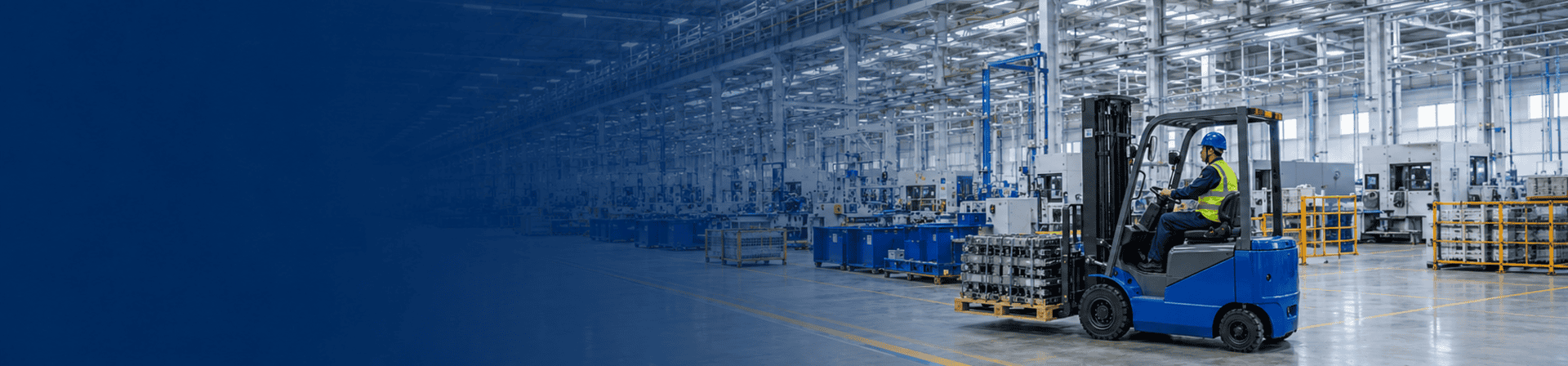
Keep materials moving from receiving to the production line and from finished-goods staging to dispatch. Anxing Machinery helps manufacturers, importers, distributors, and project buyers select electric forklifts and supporting equipment around the real load, route, shift pattern, floor, doorway, production rhythm, and charging opportunity.
A factory does not need a forklift simply because pallets are present. It needs a handling plan that protects production flow. The right electric forklift can unload raw materials, replenish workstations, move tooling or work-in-process, and transfer finished goods without introducing exhaust at the point of use. The wrong configuration can create charging delays, aisle conflicts, load damage, or insufficient capacity at the required lift height. We review the complete application before recommending a machine.
Follow the Material Flow
Manufacturing handling is a sequence of connected tasks. A delay at receiving, line-side replenishment, quality control, or finished-goods staging can affect the entire production schedule.
01
Unload palletized components, packaging, consumables, molds, and raw materials. We check truck or container access, dock plates, load weight, fork entry, unloading frequency, and the route into the factory.
02
Store and organize incoming goods before production. A counterbalanced electric forklift can handle general pallet movement, while an electric stacker may suit compact storage and shorter travel.
03
Deliver the correct material to each workstation without interrupting people, conveyors, or adjacent processes. Turning space, pedestrian separation, visibility, load stability, and delivery frequency matter as much as rated capacity.
04
Move semi-finished assemblies, stillages, bins, jigs, and palletized work between production stages. The machine and attachment must match the actual load shape, center of gravity, and handling points.
05
Transfer packed products to inspection, storage, and outbound staging. Battery capacity and availability should support daily peaks rather than only the average workload.
Why Electric
Electric power is often a strong match for indoor manufacturing, but power source alone does not determine suitability. The complete truck must be matched to the workload and site.
Electric forklifts avoid engine exhaust inside the production area. This is valuable where operators work close to the travel route or where goods pass through enclosed assembly, packaging, and inspection spaces.
Quieter equipment can improve communication and awareness in busy production areas. Warning devices, traffic controls, and operator attention remain necessary because a quiet machine may be less noticeable to pedestrians.
Many factories have columns, machines, racks, staging lanes, and narrow doorways. Overall width, turning radius, right-angle stacking requirement, mast dimensions, and load length must be checked together.
Adjustable travel and hydraulic performance can support precise handling around lines and storage areas. The selected model must still provide enough traction, gradeability, and residual lifting capacity for the application.
Charging can be aligned with breaks, shift changes, or planned downtime when the battery and charger are sized correctly. A duty-cycle review is essential for long shifts and production peaks.
An electric drivetrain generally has fewer service items than an internal-combustion powertrain. Tires, brakes, mast chains, forks, hydraulics, steering, battery systems, and safety devices still require scheduled inspection.
Equipment Selection Guide
A production site may need more than one equipment type. This first-stage guide helps separate counterbalanced handling, compact stacking, outdoor work, and elevated maintenance.
| Production Need | Recommended Equipment | Why It Fits | Important Limit |
|---|---|---|---|
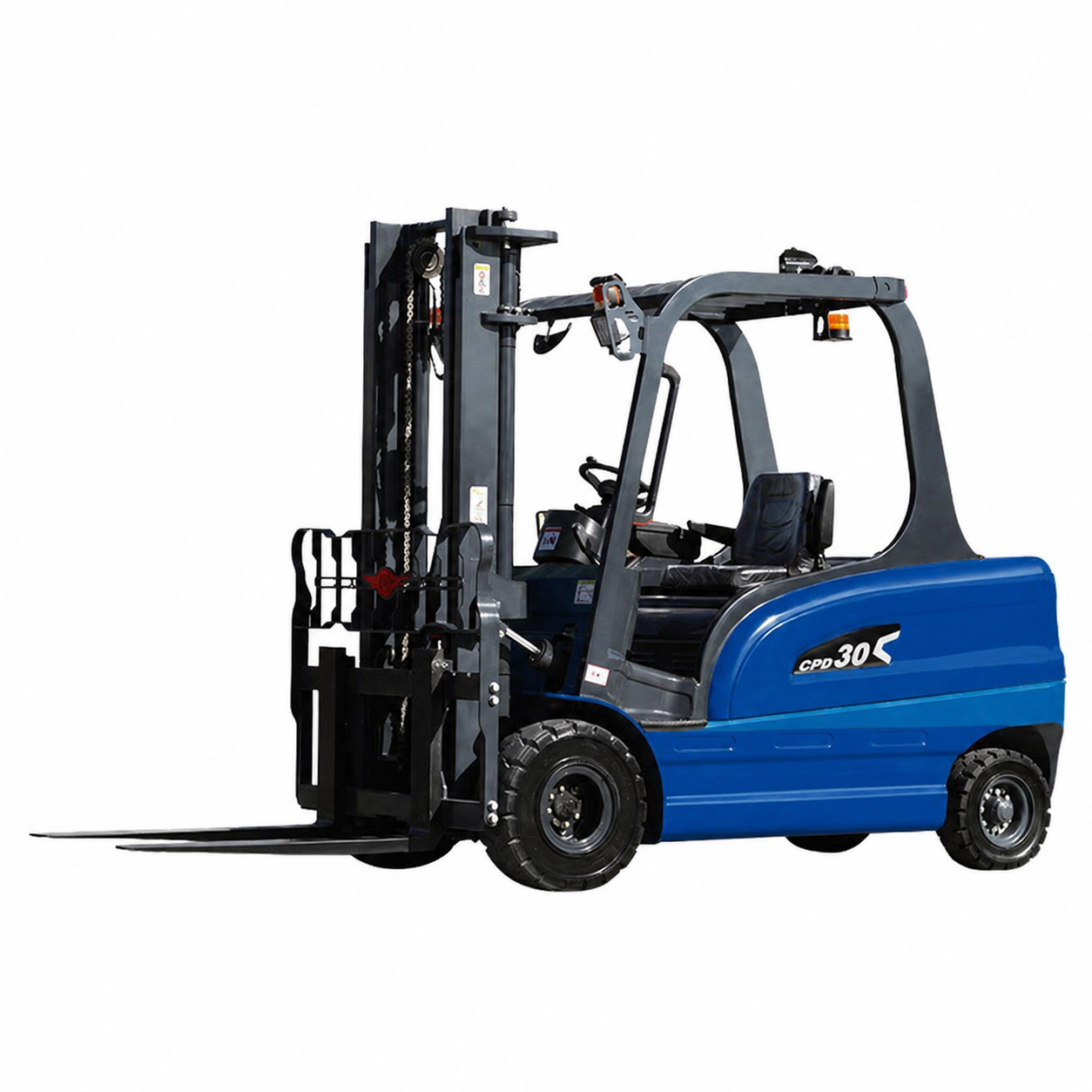
| Frequent pallet loading, unloading, line feed, and finished-goods transfer | Electric Forklift | Counterbalanced handling without support legs around the pallet; suitable for varied factory tasks | Confirm runtime, turning space, floor, ramps, load center, lift height, and attachment derating |
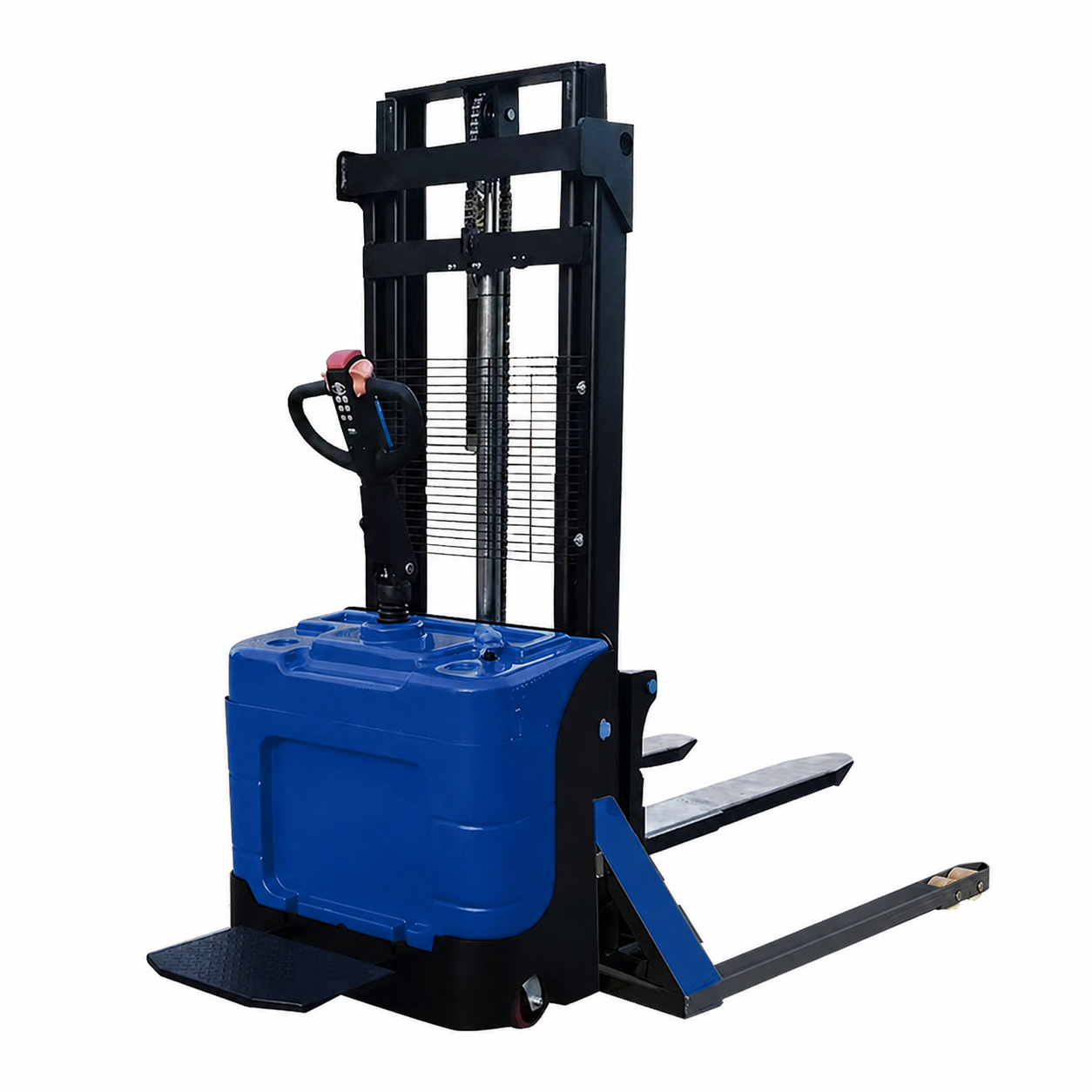
| Short travel and low- to medium-height stacking in a compact material area | Electric Stacker | Smaller footprint for controlled pallet handling where a full forklift may be unnecessary | Support legs and forks must be compatible with the pallet underside and storage layout |
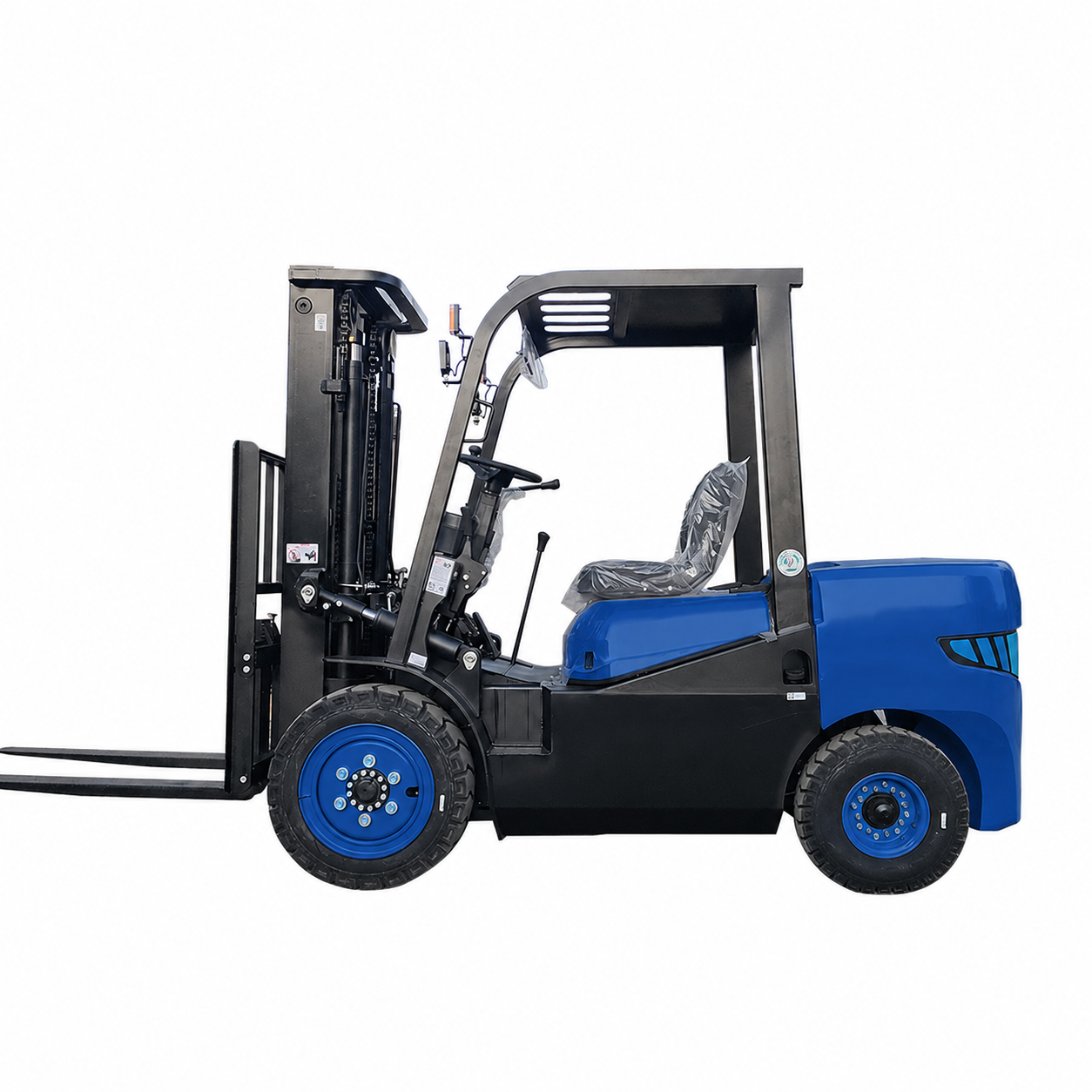
| Outdoor receiving yard with sustained duty on a firm, open surface | Diesel Forklift | Useful where fast refueling and demanding outdoor operation take priority | Do not operate in enclosed production areas without an appropriate site assessment and controls |
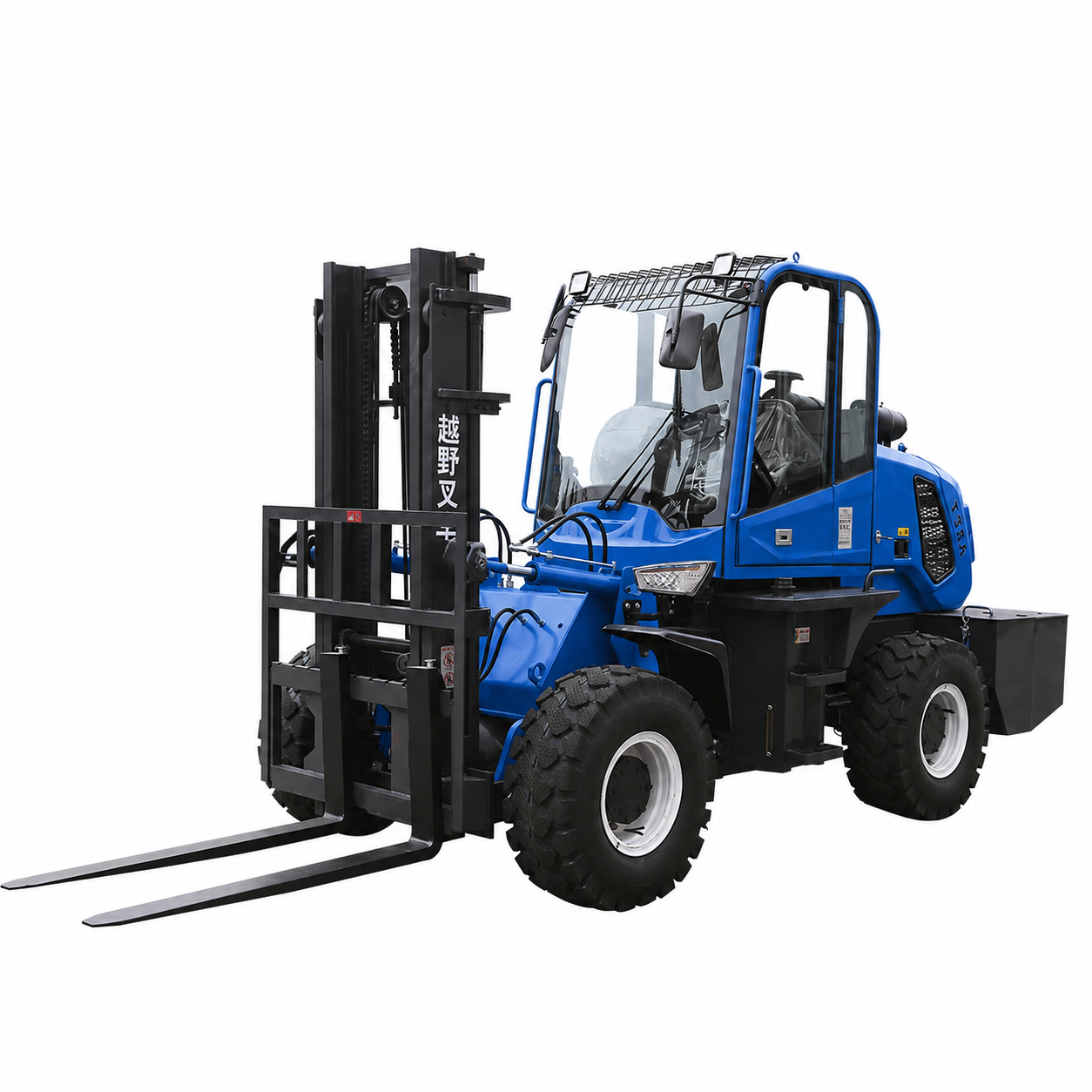
| Unpaved or significantly uneven plant yard | Rough Terrain Forklift | Traction and ground clearance are better aligned with rough access routes | Not a substitute for an indoor warehouse truck; verify slope, stability, width, and surface bearing |
| Overhead maintenance, lighting, ducting, or production-line installation | Scissor Lift | Provides a guarded work platform for vertical access when correctly selected and operated | It is not a material forklift and does not provide horizontal outreach around obstacles |
Recommended Product Solutions
01
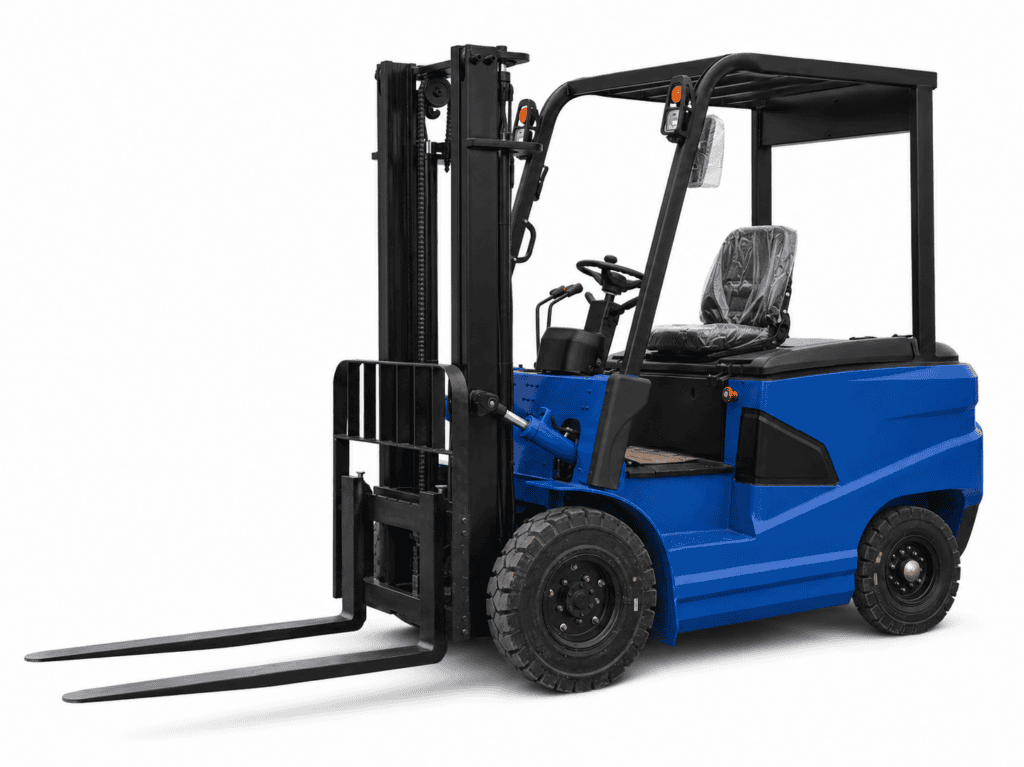
Anxing electric forklifts are the primary option for facilities that need one counterbalanced machine to perform several pallet-handling tasks. Typical work includes unloading components, feeding palletized material to production, transferring work-in-process, moving dies or tooling within verified capacity, and staging finished goods.
Selection note: Nominal capacity is only the starting point. Long loads, raised loads, high lift heights, non-standard attachments, and an extended load center can reduce usable capacity. Share the heaviest and largest load, not only the typical pallet.
View Electric Forklifts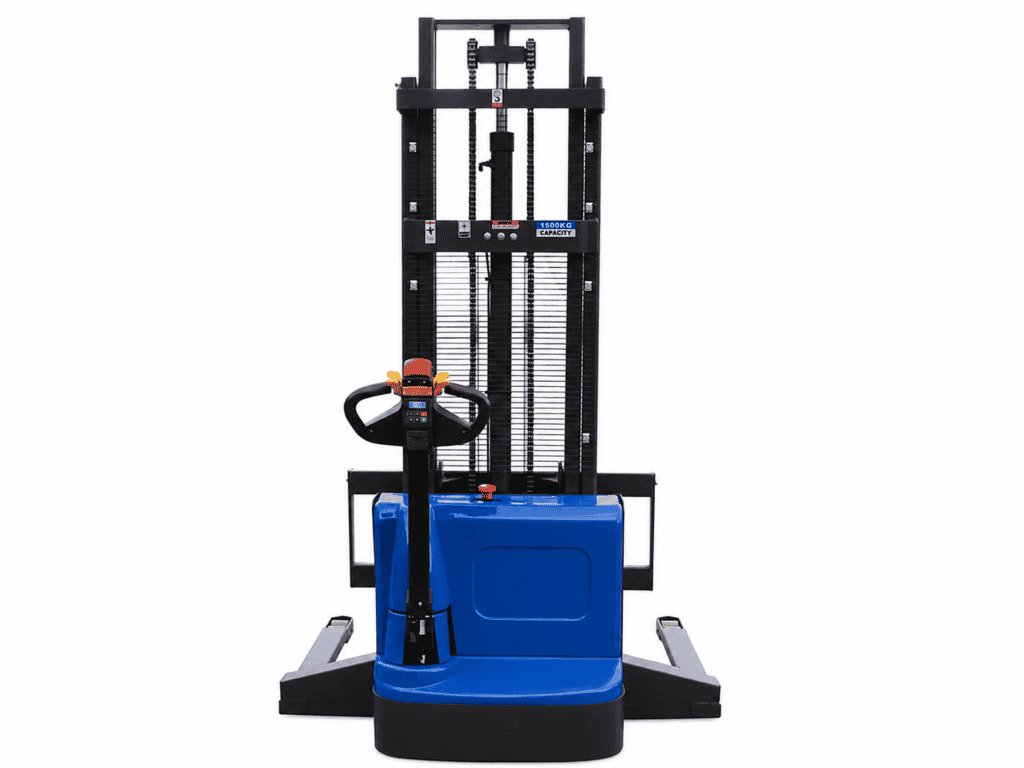
02
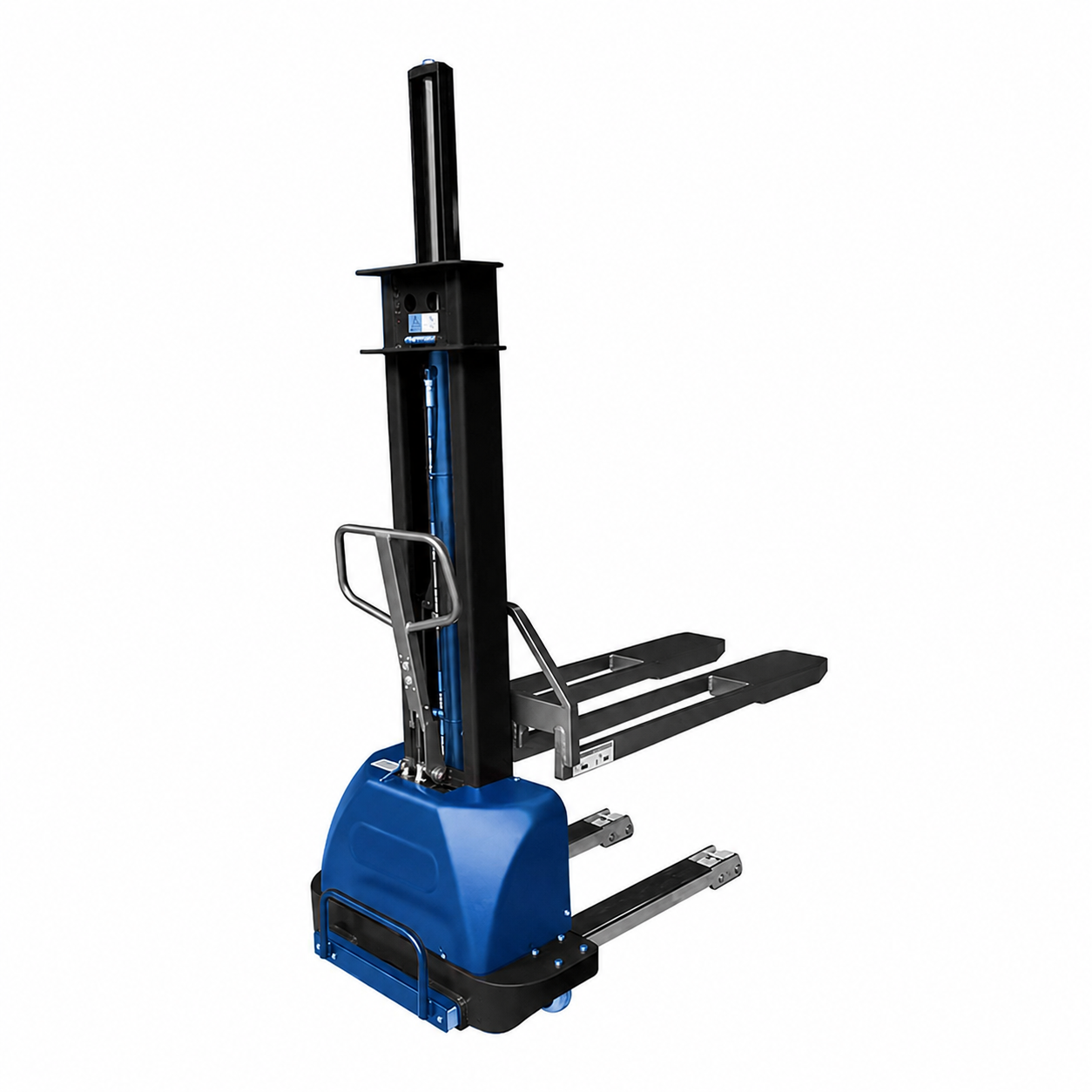
Anxing electric stackers can support short-distance pallet transfer and stacking in compact material supermarkets, packaging areas, maintenance stores, and production cells. They are worth considering where throughput and travel distance do not justify a larger counterbalanced truck.
Selection note: Confirm the pallet entry direction, bottom-board arrangement, fork pockets, straddle clearance, aisle dimension, lift height, and residual capacity. Closed-bottom pallets may not suit every stacker geometry.
View Electric Stackers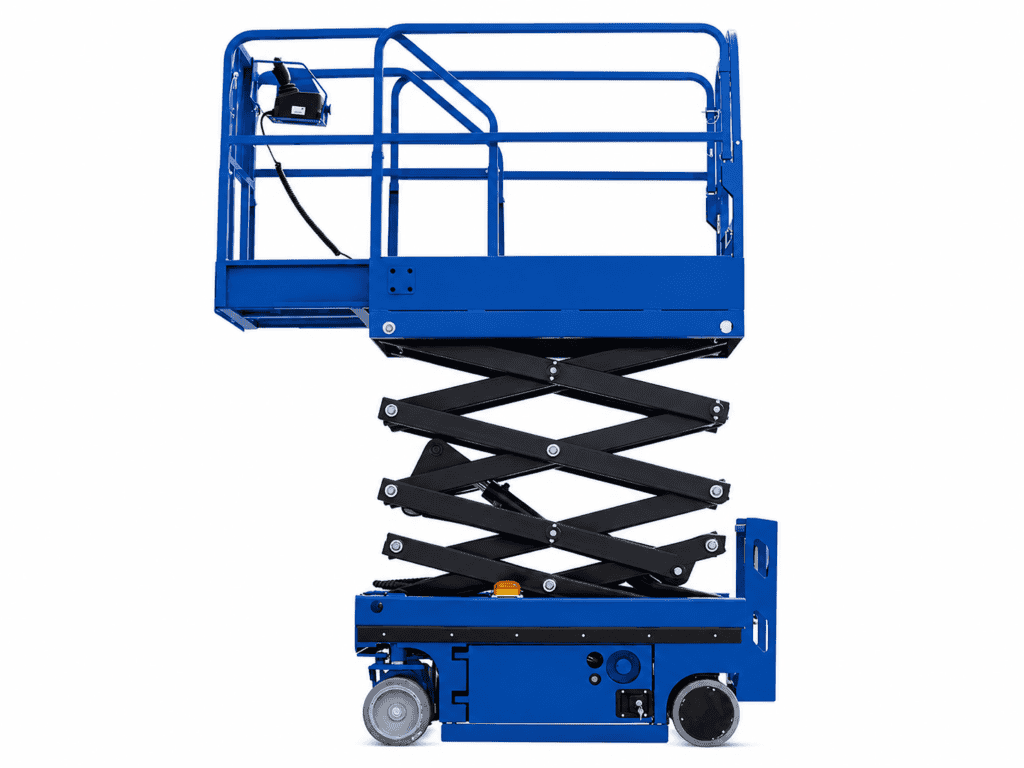
03
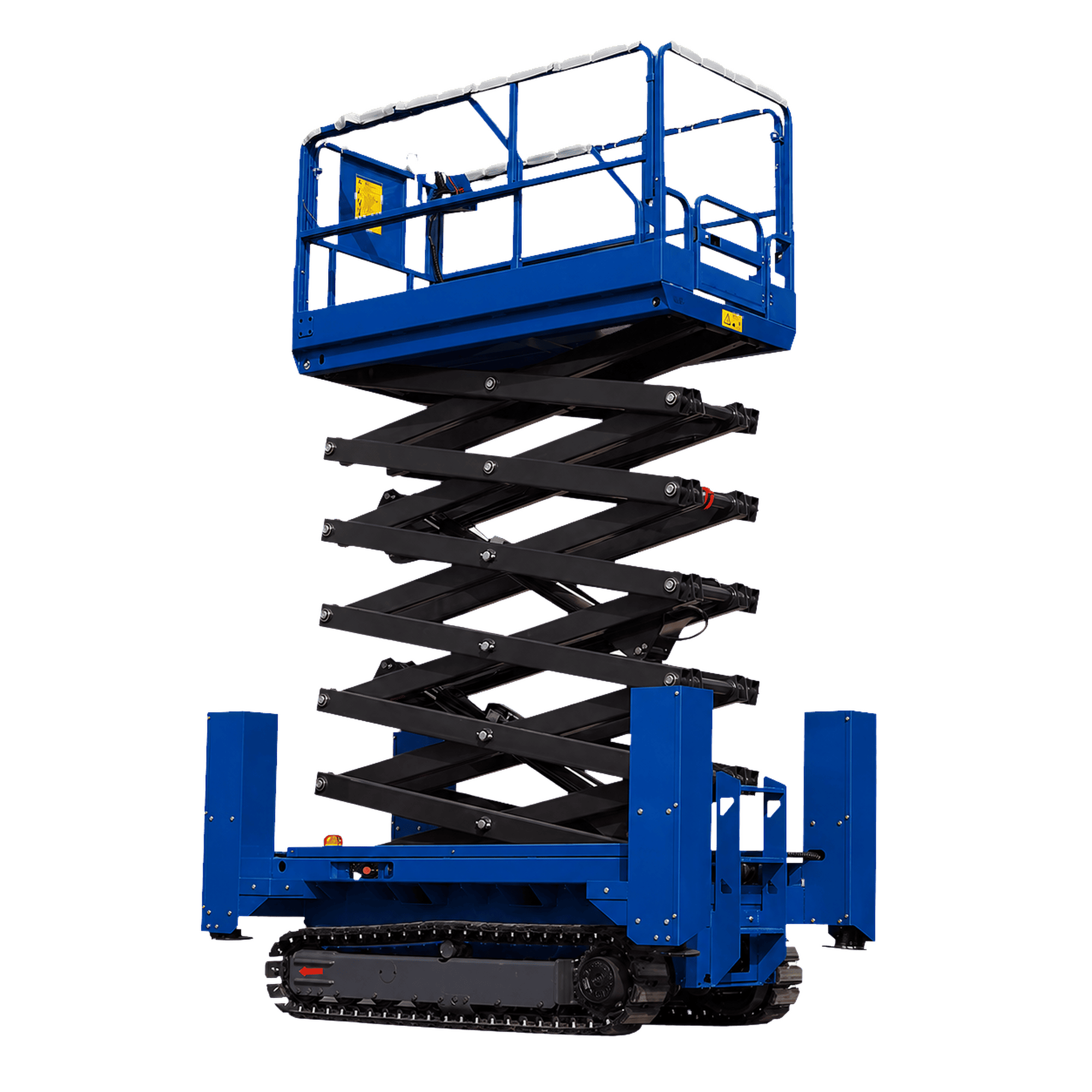
Anxing scissor lifts support vertical access for lighting, cable trays, sprinklers, ventilation, inspections, signage, and production-line installation. They should be selected separately from the material-handling fleet because platform capacity, working height, entrance dimensions, floor loading, indoor or outdoor rating, and ground condition control the choice.
Selection note: If workers need to reach horizontally over machines, pipework, or other obstacles, a scissor lift may not be suitable. Review the complete access path and task before choosing the platform type.
Read the Work at Height SolutionTypical Facility Profiles
Compact electric forklifts can move palletized components and finished goods between receiving, assembly, test, and dispatch. Key checks include aisle traffic, sensitive loads, door height, clean indoor operation, and controlled acceleration.
Frequent movement of packaging materials and finished cartons may create short, repetitive cycles. Review fork dimensions, pallet quality, load stability, travel frequency, peak dispatch periods, and charging windows.
Dense or irregular loads require careful center-of-gravity analysis. Tooling, dies, metal bundles, and machine components may need a higher-capacity configuration or purpose-selected attachment rather than standard forks.
Line-side delivery and stillage movement can involve high frequency, long shifts, and tight takt times. Battery capacity, opportunity charging, fleet availability, visibility, attachment choice, and operator ergonomics become central selection factors.
Raw material, packaging, molds, and finished parts may have very different load characteristics. Provide separate weights, dimensions, lift points, and movement routes for each critical load.
A single versatile electric forklift may cover receiving, production supply, and dispatch, while a stacker handles compact storage. The goal is to avoid both undersizing and buying unnecessary equipment.
Application Data
Accurate data reduces the risk of capacity, clearance, charging, and attachment problems after delivery.
| Selection Area | Information to Provide | Why It Matters |
|---|---|---|
| Load | Maximum weight, normal weight, dimensions, load center, stability, pallet or stillage type | Determines capacity, fork size, attachment, mast, and residual-capacity requirements |
| Lift | Maximum fork height, top load height, free-lift need, overhead obstructions | Defines mast selection and whether the truck can pass through doors or operate below ceilings |
| Route | Narrowest aisle, doorway size, turning points, travel distance, ramps, dock plates | Controls truck dimensions, turning performance, tire choice, and gradeability |
| Floor | Surface material, joints, debris, wet areas, floor-loading limits, indoor-outdoor transitions | Affects tires, traction, ride, stability, component protection, and suitability |
| Duty Cycle | Hours per shift, shifts per day, lifts per hour, travel intensity, seasonal peaks | Supports battery, motor, charger, cooling, and fleet-availability planning |
| Site Power | Voltage, phase, frequency, available power, charger location, charging windows | Ensures the charging solution is compatible with the destination facility |
| Operating Environment | Temperature, dust, moisture, ventilation, cleanliness needs, restricted zones | Identifies whether standard equipment is suitable or application-specific protection is required |
Battery & Charging Plan
Runtime varies with load weight, travel distance, lift frequency, ramp use, acceleration settings, temperature, attachment demand, operator behavior, and battery condition. A quoted maximum operating time cannot replace a duty-cycle review.
Many single-shift facilities can charge during overnight downtime, but the battery must still cover peak periods and unexpected overtime with an appropriate reserve.
Long or continuous schedules may require a larger energy package, opportunity charging, additional trucks, or a planned battery strategy. Charging time and charger capacity are part of fleet sizing.
Plan a designated area with the power supply, clearances, ventilation or other provisions required by the selected battery system and local rules. Protect chargers from traffic and impact.
Lead-acid and lithium-ion systems have different charging, maintenance, infrastructure, operating, storage, and lifecycle considerations. Availability and final configuration must be confirmed for the selected model.
Configuration Support
Through our OEM & ODM support, distributors and project buyers can discuss market-specific configurations, branding, documentation, and order requirements. Availability depends on model and technical review.
From Requirement to Delivery
You share the load list, layout, routes, lift heights, working hours, floor conditions, site power, destination market, and purchasing plan.
We compare suitable electric forklifts, stackers, and supporting equipment, explaining the key selection limits.
Capacity, mast, forks, tires, battery, charger, options, quantity, documentation, and branding are confirmed before the order is finalized.
Confirmed requirements guide production and pre-delivery inspection. Buyers can review relevant company information on our Certifications page.
We coordinate the order through shipping and delivery and provide available manuals, service information, and after-sales support.
Operational Responsibility
Equipment selection is only one part of a safe material-handling system. The owner and operator should complete a site-specific risk assessment, train and authorize operators, inspect equipment, define travel routes, manage speed, separate pedestrians where practicable, maintain visibility at intersections, secure loads, control ramps and docks, and follow the machine manual and applicable local regulations.
Never lift personnel on forks or an improvised platform. Use a correctly selected access machine for elevated work. Never exceed the capacity shown for the approved truck and attachment configuration, and do not treat nominal truck capacity as available capacity at every height or load center.
Buyer Questions
Yes, when the truck is matched to the load, floor, route, lift height, duty cycle, charging plan, and environment. Common factory tasks include receiving, line-side supply, work-in-process transfer, finished-goods handling, and dispatch.
Often it can, but only if the same configuration fits both zones. Check the narrowest aisle, lowest doorway, highest rack, heaviest load, longest load center, steepest ramp, tire requirement, and total daily operating hours across the complete route.
Provide the verified weight, dimensions, center of gravity, lifting points, fork entry, required attachment, and maximum lift height. Dense or irregular loads can shift the effective load center, and attachments can reduce residual capacity. A technical review is required.
An electric forklift is generally more versatile for frequent transport, loading, and counterbalanced handling. An electric stacker can be more economical and compact for shorter routes and compatible pallets. The right choice depends on task frequency, pallet design, aisle space, load, and lift height.
Share the actual operating hours, lifts per hour, travel distance, load profile, breaks, shift changes, peaks, and site power. We can then discuss a suitable battery and charger configuration. Continuous production may require opportunity charging, additional equipment, or another planned energy strategy.
Compatible attachments may be considered, but their weight, forward center of gravity, hydraulic needs, mounting, and effect on visibility and residual capacity must be reviewed. Do not add an attachment without confirming compatibility and updated capacity information.
Some configurations can operate on compatible outdoor routes, but surface condition, weather exposure, water protection, tires, ground clearance, ramps, and traction must be checked. Rough or unpaved yards may require a rough-terrain forklift instead.
Send the maximum load weight and dimensions, load center, pallet or stillage details, lift height, aisle and doorway dimensions, route and ramps, floor condition, shifts and hours, charger power supply, operating temperature, destination country, quantity, and required options. Photos or a simple layout are helpful.
Plan Your Factory Fleet
Send us your load data, facility dimensions, material route, shift schedule, and destination market. Anxing Machinery will help you compare a practical equipment configuration and prepare a quotation.