Key Takeaways
- Choose the smallest scissor lift that provides the required working height and platform capacity while fitting the complete access route, floor or terrain conditions, power supply and transport limits. Compare working height and platform height separately, and calculate capacity from all occupants, tools and materials.
Start with four figures: maximum working height, maximum platform height, overall machine width and rated platform load. Then verify the platform dimensions, stowed height, machine weight, turning space, surface requirements, power system and transport plan. These specifications interact: extra height can increase machine size and weight, while a narrow chassis does not automatically provide the deck area or terrain capability required by the job.
Four Scissor Lift Size Terms Buyers Must Separate
Maximum working height
Maximum working height is an estimated reach level for a person standing on the platform. Many metric specification sheets calculate it by adding about 2 m to platform height, but this is a convention rather than a guarantee that every operator can perform every task at that elevation. The exact definition can vary by manufacturer, market and indoor or outdoor rating. Use the value published for the exact configuration and check the required hand position, obstacle clearance and task geometry.
Maximum platform height
Maximum platform height is the vertical distance from the supporting surface to the platform floor at full elevation. This is the more precise machine dimension. It is not the same as the height of the worker’s hands or the top of the guardrails. When comparing quotations, confirm whether a headline such as “10 m scissor lift” means platform height or working height; otherwise, two suppliers may appear to offer the same size while describing different reach.
Machine width and platform width
Machine width determines whether the stowed lift can pass through doors, aisles and gates. Platform width describes the usable deck and is usually smaller than the overall chassis width. Neither figure proves that the machine can complete the route. Buyers must also check machine length, stowed height with guardrails raised and folded, turning radius, ramp transitions, elevator dimensions and clearance around racks or equipment.
Rated platform load
Rated load is the total allowable weight specified for the platform under the stated operating conditions. The load calculation must include occupants, tools, components, consumables and any other material carried on the deck. An extension deck can have a separate, lower rating. Do not assume that the main platform rating applies at the extension or that a larger deck permits a larger load.
Scissor Lift Height, Width and Capacity Compared
The following table uses verified Anxing examples to show how the four main size variables change across equipment types. Values apply only to the named model and configuration. The mobile hydraulic model is listed by platform height because its product page does not publish a calculated working height.
| Verified example | Maximum height | Machine width | Platform size | Rated or safe working load | Primary selection reason |
|---|---|---|---|---|---|
| GTJZ-4 mini electric | 6 m working; 4 m platform | 700 mm | 1,300 × 680 mm | 230 kg | Low-level work and restricted indoor access |
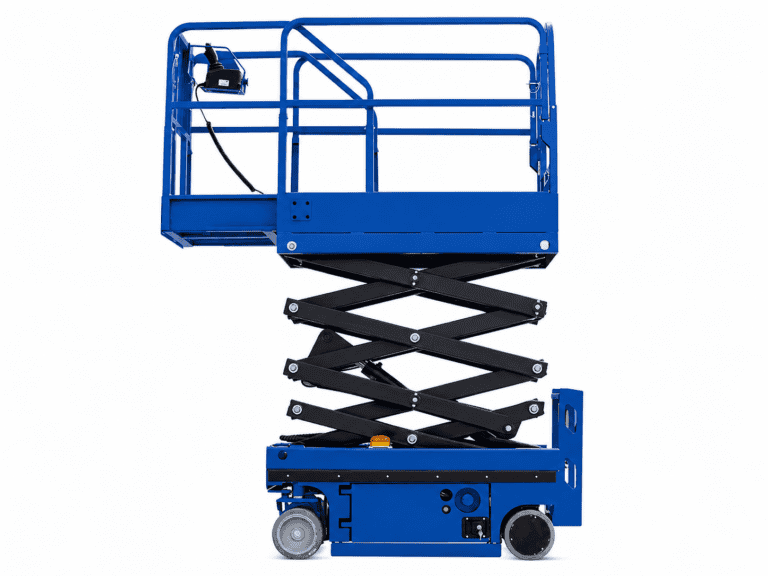
| GTJZ-8 Narrow electric | 9.8 m working; 7.8 m platform | 840 mm | 2,270 × 810 mm | 450 kg | Narrow routes with a longer deck and higher load requirement |
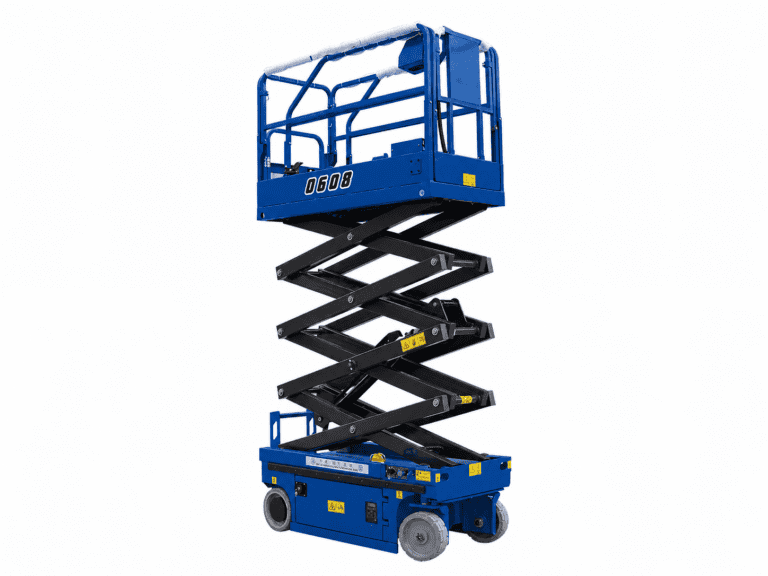
| GTJZ-10 electric self-propelled | 12 m working; 10 m platform | 1,160 mm | 2,270 × 1,130 mm | 320 kg | General slab work where reach and deck width matter |
| AX-0.5-10 mobile hydraulic | 10 m platform | 1,290 mm | 2,010 × 1,130 mm | 500 kg | High platform load where self-propelled travel is not the first requirement |
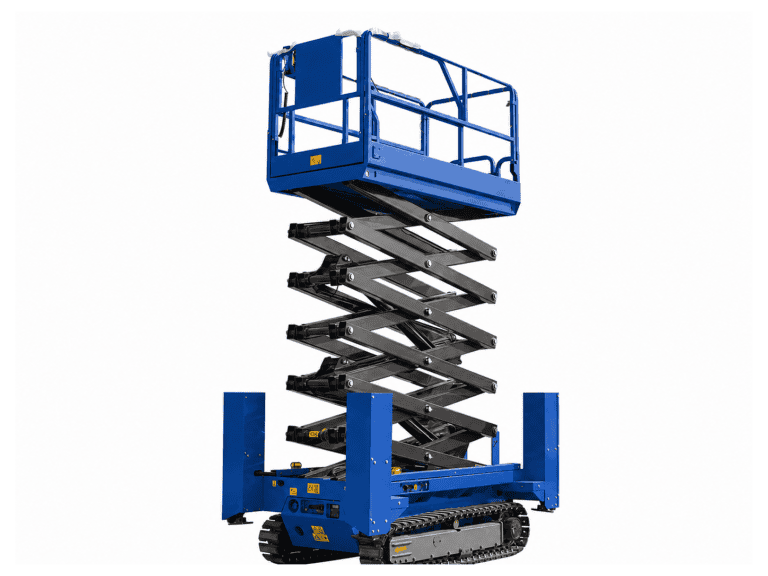
| ZXLD-10 crawler | 12.8 m working; 10 m platform | 1,570 mm | 2,270 × 1,120 mm | 320 kg | Tracked access and mobility requirements |
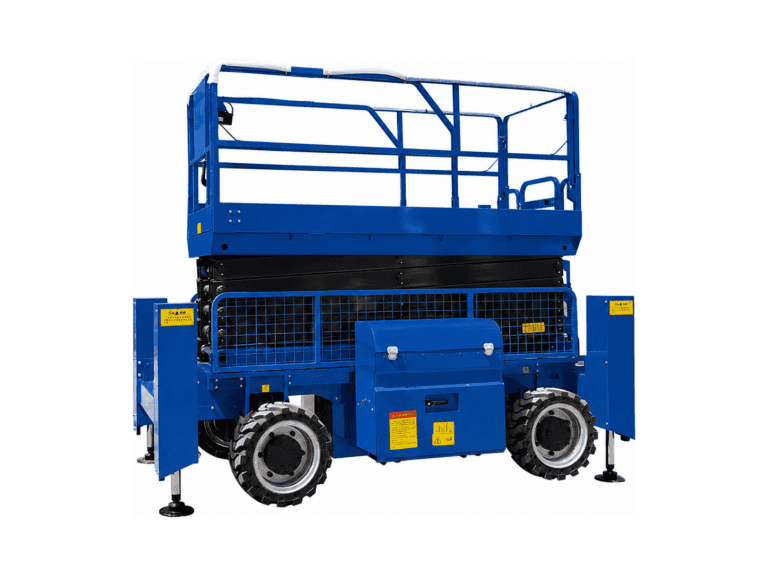
| GTJZ-13 diesel rough terrain | 15.1 m working; 13.1 m platform | 2,300 mm | 3,980 × 1,830 mm | 680 kg | Outdoor rough-terrain work with a large crew platform |
This comparison shows why height alone is a weak buying filter. The 9.8 m narrow electric model has an 840 mm chassis and a stated 450 kg safe working load. The 12 m electric example is taller and wider but has a stated 320 kg load. The diesel rough-terrain example provides a much larger platform and greater load rating, yet its 2.3 m width and 7,230 kg machine weight change the access, hauling and ground-support requirements.
Choose Height from the Task, Not the Building
Measure the highest point where the operator’s hands, tools or material must be positioned. A building’s ceiling or facade height is not enough because the lift may stand on a lower slab, outside a loading bay or beside an obstruction. Record the supporting-surface elevation and the required work position, then add practical clearance for positioning without treating the catalog maximum as the normal working point for every cycle.
Scissor lifts mainly provide vertical elevation. A platform extension can offer limited outreach over an obstacle, but it does not turn the machine into a boom lift. If the machine cannot be positioned beneath or close to the task, greater vertical height may not solve the access problem. Mark trenches, fixed equipment, shelving, landscaping, traffic lanes and other areas that prevent the chassis from reaching the ideal position.
Also compare indoor and outdoor ratings for the exact model. Some equipment can have different permitted heights, capacities or occupant limits depending on the environment. Wind exposure, slope and surface conditions can restrict operation even when the machine’s headline height appears sufficient. The quotation, data plate and manual for the selected configuration should agree on the permitted use.
Width Means the Entire Route, Not One Door
The narrowest opening is an obvious constraint, but a route survey should start at unloading and end at the work position. Measure gate and door width, door height, aisle width, elevator entrance and car dimensions, turning corners, ramps and overhead services. Allow operational clearance rather than specifying a machine that only fits on paper with no room for steering or site tolerances.
For highly restricted indoor access, Anxing’s 6–8 m mini electric scissor lift range includes overall widths of 700 mm and 780 mm. The 9.8 m narrow electric scissor lift is 840 mm wide and provides a 2,270 × 810 mm working platform. These figures create different tradeoffs: the smallest chassis can enter tighter areas, while the longer narrow platform can better support work that needs more deck length.
Vertical access deserves equal attention. Folded guardrails can reduce stowed height, but the folding procedure and resulting dimensions must be confirmed. For example, the verified narrow electric model is 2,340 mm high with guardrails raised and 1,820 mm with them folded. Check whether rails must be lowered before every doorway and whether the site has a controlled place to carry out that procedure.
Calculate Capacity from the Heaviest Planned Platform Load
Create a realistic load list for the most demanding recurring task. Include every person, tool case, cable, fitting, panel, duct section, coating container and other item that will be on the platform at the same time. Use the total to establish the required rating, then confirm the model’s occupant limit and load-distribution instructions. A 500 kg rating is not permission to place one concentrated 500 kg object anywhere on the deck.
Platform dimensions determine whether materials fit without obstructing controls, gates or the work area. Long HVAC sections, cladding panels and pipe can require more usable deck length even when their mass is modest. Dense components can reach the weight limit before the platform looks full. Extension decks improve positioning and space, but Anxing’s product sheets state separate extended-platform loads on several ranges; these are lower than the main safe working load and must be treated separately.
Do not buy capacity purely as unused margin. A higher-capacity machine may have a wider platform, greater transport weight and larger turning envelope. Compare the smallest configuration that satisfies the documented task load with the next size up, then identify whether the heavier option delivers a genuine productivity advantage or simply creates access problems.
Match the Chassis and Power System to the Site
Flat finished floors
Compact electric and slab-style self-propelled lifts are normally considered first for factories, warehouses, commercial interiors and maintenance areas with firm, level surfaces. Buyers should still confirm tire type, floor protection requirements, wheel loads or ground-bearing data, turning radius, charging supply and the exact indoor or outdoor rating. Overall machine weight alone is not sufficient to approve a lift for a slab, mezzanine or elevator.
Sites that need a mobile but non-self-propelled platform
Anxing’s 4–14 m mobile hydraulic scissor lift range lists a 500 kg rated load across its published configurations. It uses platform height in its model comparison and lists AC 380 V, 50 Hz as the standard power input. Buyers should confirm how the unit will be moved, stabilized and powered at each work point; “mobile” should not be interpreted as self-propelled.
Tracked or rough outdoor access
A crawler platform or a diesel rough-terrain machine addresses a different access problem from a narrow slab lift. The crawler range uses tracks and is wider and heavier than the compact electric examples. The 12–18 m diesel rough-terrain scissor lift range lists 4WD, 2WS, 360 mm ground clearance and a 2.3 m machine width. These specifications support a rough-terrain shortlist, but they do not authorize operation on any slope or surface. Travel gradeability is not the same as a permitted elevated working angle.
Before selecting an outdoor machine, document soil condition, compaction, slope, drop-offs, trenches, wind exposure and changing weather. Confirm whether outriggers or other leveling provisions are included or required for the quoted configuration. The equipment must be used within its manual and data-plate limits and the applicable site and destination requirements.
How the Anxing Scissor Lift Range Fits Different Size Needs
The Anxing scissor lift range covers six distinct equipment formats rather than one continuous ladder of heights. That structure helps buyers start from the work environment and then choose height:
- Mini electric: 6 m or 8 m maximum working height, 230 kg safe working load and compact 700–780 mm widths for low-level restricted access.
- Narrow electric: 9.8 m working height, 840 mm width and 450 kg safe working load where a narrow chassis and longer platform are both important.
- Electric self-propelled: published working heights from 8 m to 18 m, with different platform sizes, widths and load ratings across configurations.
- Mobile hydraulic: published platform heights from 4 m to 14 m and a 500 kg rated load, with AC power listed as standard.
- Crawler: published working heights from 8.8 m to 15.8 m for buyers who specifically need tracked mobility and can accommodate the greater width and weight.
- Diesel rough terrain: 12 m to 18.2 m maximum working height, a large 3.98 × 1.83 m platform, 4WD and load ratings of 680–1,150 kg depending on model.
This is a class-level shortlist, not a final specification. The electric self-propelled range, for example, does not keep the same load rating as height increases: the published configurations range from 230 kg to 450 kg. The diesel range also changes from a stated 1,150 kg at 12 m working height to 680 kg at the two taller configurations. Compare the actual row in the specification table, not only the family headline.
For projects that combine indoor facility work, exterior construction or maintenance at elevation, the work-at-height equipment solution provides a broader application view. Final model selection still requires the measured route, platform load, surface and duty information for the specific job.
A Practical Scissor Lift Sizing Workflow
- Define the task position. Record the highest hand or material position, the supporting-surface elevation and whether an obstacle prevents the chassis from sitting beneath the work.
- Separate working and platform height. Write both required values into the comparison. Do not compare one supplier’s working height with another supplier’s platform height.
- Survey the complete access route. Measure width, stowed height, corners, ramps, elevators and the working footprint from unloading point to final position.
- Calculate the maximum platform load. Add occupants, tools and materials for the heaviest planned task. Identify items that will sit on the extension deck.
- Set the usable platform dimensions. Check that long or bulky materials fit while gates, controls and required standing areas remain clear.
- Classify the surface and environment. Document indoor or outdoor use, floor type, ground condition, slope, wind exposure, emissions limits and noise restrictions.
- Confirm mobility and power. Decide whether the machine must be self-propelled, tracked or manually repositioned, and identify the available charging or AC supply and expected shift pattern.
- Check floor and transport constraints. Obtain the configured machine weight, stowed dimensions and appropriate floor-loading information, then verify the elevator, slab, truck, container and unloading plan.
- Compare two adjacent configurations. Identify exactly what the larger machine adds in reach, capacity or platform space and what it removes in access or transport flexibility.
- Approve the exact quotation. Make sure the model, height definitions, ratings, power system, tires or tracks, extension deck, included options and destination documents are unambiguous.
Common Scissor Lift Size Mistakes
Selecting from ceiling height alone
Ceiling height does not account for the operator’s task position, the elevation of the supporting surface or the inability to place the machine directly below the work. Measure the actual geometry.
Treating working height as platform height
This can result in a material reach error. Keep the two values in separate RFQ fields and require the quotation to state both where available.
Measuring width but ignoring turning space
A lift can pass through a door and still fail at the next corner or aisle. Check length, turning radius and clearance around obstructions, not just overall width.
Using main deck capacity for the extension
Extension decks often have their own lower rating. Assign each person and material item to its expected platform location before confirming capacity.
Confusing gradeability with elevated operation on a slope
Gradeability is commonly a travel-performance specification. It does not state that the platform may be raised on the same grade. Use the allowable working-angle information and the operating manual for the exact model.
Ignoring machine weight and floor loading
Access is not proven because the lift fits inside an elevator or onto a slab. Confirm rated capacity, wheel loads or ground-bearing information and configuration weight with the responsible site parties.
What to Send in a Scissor Lift RFQ
A useful RFQ should describe the job rather than ask only for an “8 m” or “12 m” machine. Send Anxing the following information:
- required maximum working height and platform height;
- indoor, outdoor or mixed use, including wind and environmental conditions;
- complete access-route width, height, turning and elevator limits;
- number of occupants and the total weight of tools and materials;
- minimum usable platform dimensions and extension-deck needs;
- floor type, ground condition, slope, drop-offs and surface-protection requirements;
- self-propelled, mobile, tracked or rough-terrain mobility requirement;
- available electrical supply, charging schedule and expected daily operating hours;
- configured machine-weight or transport limits and unloading method;
- quantity, destination country, destination port or city, and requested manuals, markings and documents to confirm.
Photos, floor plans and a dimensioned route sketch reduce ambiguity. With those inputs, Anxing can compare the height, width, platform and capacity of adjacent configurations and identify whether access, load, surface or power is the controlling requirement. The final quotation should be checked against the exact product data, operating manual and applicable destination and jobsite requirements before purchase.