In This Article
If there is no loading dock and no conventional forklift at the delivery point, the difficult part is not moving the pallet across the floor. It is raising a loaded pallet from ground level to the van’s cargo floor, then reversing that height change safely at the destination.
For regular delivery work, the most self-contained answer is often a self-loading pallet stacker. The machine handles the pallet and can also load itself into a compatible van, so the unloading equipment travels with the cargo. A liftgate and pallet jack, an engineered loading ramp, or forklift support at both ends may be better in other operations. The right method depends on the load, the vehicle and what the driver will find at each stop.
This guide explains those choices and the checks we ask for at Anxing before recommending a machine. If you are searching for how to load a pallet into a van without a forklift, begin with the complete transport job—not with a single equipment specification.
The Real Problem Is the Height Change
A manual pallet jack can roll a pallet on a level floor, but it cannot lift that pallet to the cargo deck of a van. Planks or improvised ramps do not turn it into a loading system. The slope may be too steep, the ramp may move, and the combined weight of the load and equipment may exceed what the surface can support.
A proper solution must control three transitions: pickup from the warehouse floor, movement across the difference in height, and placement inside the vehicle. It must work again when the van arrives—possibly at a small shop, construction site or customer warehouse with no dock and no equipment available.
That last point changes the buying decision. A method that works at the dispatch warehouse is incomplete if the driver cannot unload at the destination. Delivery frequency matters too. Hiring local equipment for an occasional heavy shipment can be sensible. When the same van makes repeated pallet deliveries, carrying the handling machine may remove a recurring dependency.
Four Practical Ways to Bridge the Gap
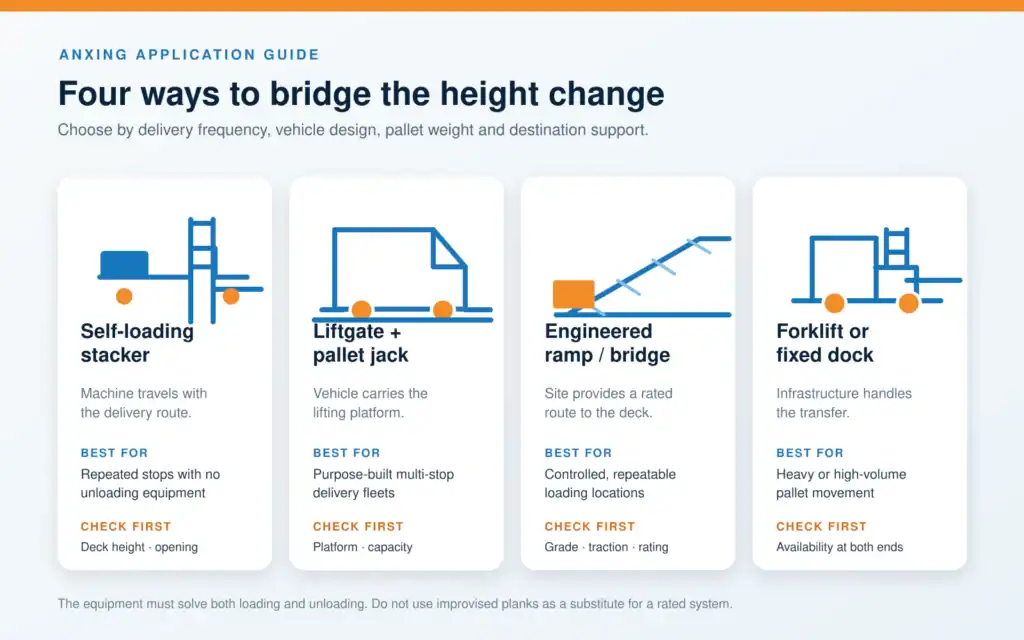
| Method | Where it works well | What must be available | Main checks |
|---|---|---|---|
| Self-loading pallet stacker | Repeated deliveries to sites without handling equipment | A compatible van, pallet and operating surface | Load weight and center, cargo-floor height, door opening, payload, floor strength and securing arrangement |
| Liftgate plus pallet jack | Multi-stop delivery vehicles already specified with a suitable tail lift | A rated liftgate and enough platform space for the pallet and handling method | Platform dimensions and capacity, pallet control, ground condition and vehicle payload |
| Engineered ramp or dockboard with compatible equipment | Known locations with a controlled layout and modest height transition | A rated, secured ramp or bridge and equipment approved for its slope | Grade, traction, edge protection, ramp capacity, vehicle restraint and clearance |
| Forklift or dock service at both ends | Heavier loads, high throughput or sites with existing infrastructure | Reliable equipment and trained operators at every transfer point | Scheduling, vehicle access, pallet condition and loading coordination |
There is also a fifth response: break the shipment into hand-carried pieces. That may be acceptable for light cartons, but it is not pallet handling. It adds labor, exposes the goods to more handling and may be impossible for drums, machinery, stone, batteries or tightly wrapped orders. We would not treat it as the default answer to a pallet-loading problem.
When a Self-Loading Stacker Earns Its Place in the Van
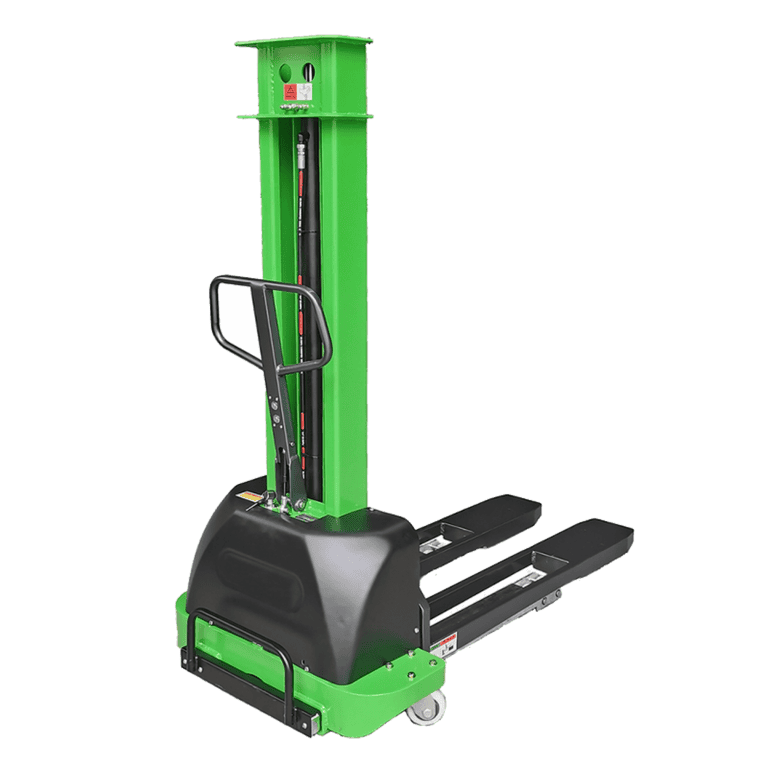
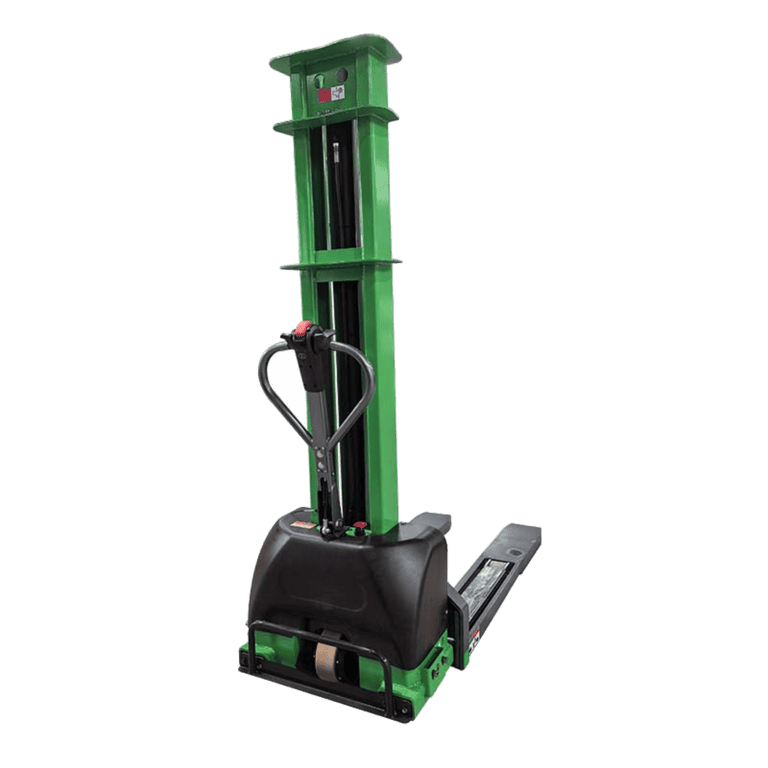
A self-loading stacker is designed around a simple operational idea: one compact machine stays with the delivery route. It lifts the pallet in the normal way, positions the load in the vehicle and then raises or transfers itself to the vehicle’s cargo floor using its self-loading arrangement. The exact operating sequence is model-specific and must follow the manufacturer’s instructions; it is not something to improvise from a generic online video.
The format is most attractive when deliveries are frequent, pallet weights are within the machine’s range and the destination cannot promise a forklift. It can also suit businesses that do not want to dedicate a larger tail-lift truck to relatively compact loads. Typical conversations we see involve equipment parts, packaged materials, retail replenishment and service operations where a pallet must be placed close to the customer’s working area.
Compact does not mean universal. The vehicle needs enough opening and interior clearance for the stacker, pallet and mast. Its payload must cover the cargo, the stacker, the driver, accessories and anything else carried on the route. At the destination, the ground must be firm, sufficiently level and clear enough for controlled handling. A machine selected only from its rated load can still be completely wrong for the van.
Measure the Actual Vehicle Before Choosing the Machine
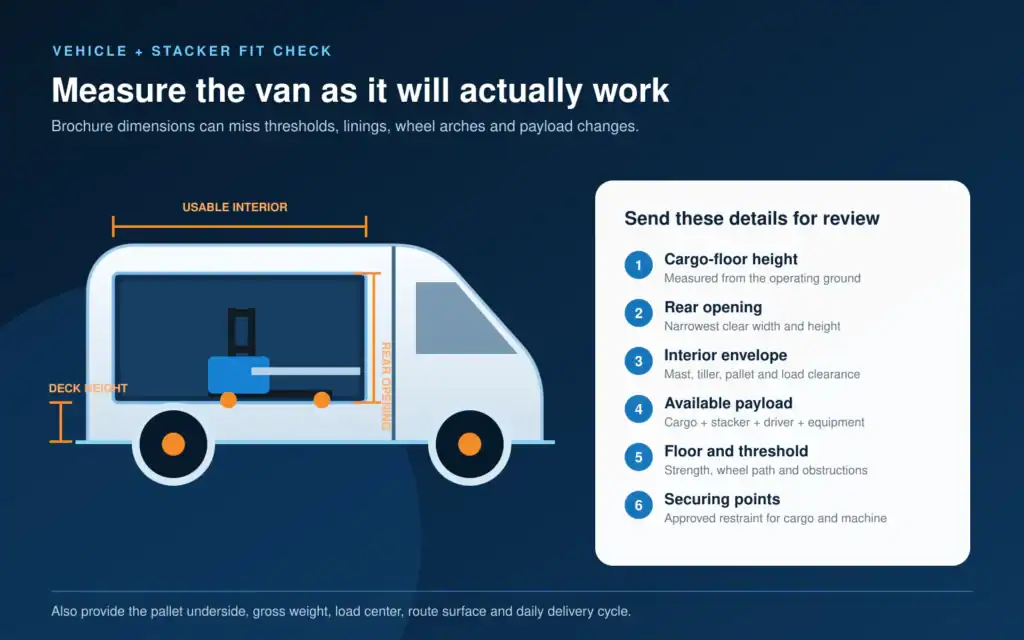
Vehicle names are not precise specifications. Two vans sold under the same model family can have different roof heights, rear doors, wheel-arch spacing, linings, payload ratings and floor conversions. Measurements taken from a brochure can also miss plywood lining, thresholds, refrigeration equipment and internal tie-down rails.
For a configuration review, we ask for the following information from the van that will actually do the work:
- Cargo-floor height: measure from the operating ground to the finished cargo floor, with the vehicle in its normal loading condition. This must fall within the stacker’s configured self-loading range.
- Rear opening: record the narrowest clear width and height, including door hardware, seals, steps and any intrusion near the threshold.
- Usable interior envelope: measure the floor length, width between restrictions and clear height along the proposed storage position. Check the mast, tiller, pallet and load—not just the stacker body.
- Payload: use the vehicle’s legal and manufacturer-approved payload for its actual configuration. Deduct every person, machine, pallet and piece of cargo carried.
- Cargo floor and threshold: confirm that the structure is suitable for the point loads and wheel paths involved. A decorative floor covering is not evidence of structural capacity.
- Securing points: plan how the stacker and cargo will be restrained for transport using approved points and procedures. Parking the machine against a pallet is not cargo restraint.
Photos help, especially a square-on view of the open rear doors, the threshold, the cargo floor and the intended position inside. For vehicles with side loading only, wheel arches, door width and turning space usually become even more restrictive.
The Pallet Can Rule Out a Machine Before the Van Does
“One Euro pallet” is not enough information for a quotation. The underside construction decides whether the forks can enter and whether support legs or wheels have a clear path. Plastic runners, bottom boards, stringers and fixed fork pockets can all create interference even when the outside length and width look familiar.
We need the gross loaded weight, including the pallet and packaging, plus the load depth in the fork direction. A deep load or weight concentrated toward the far end moves the center of gravity forward. That can reduce the allowable load compared with the headline rating. Loose, unstable or overhanging goods may also be unsuitable for the transfer even if the scale weight is within range.
Turn over an empty representative pallet and take a clear photograph. Mark the intended entry face, then add the opening height and width, bottom-board layout and overall dimensions. If your suppliers use several pallet constructions, review the least favorable one rather than assuming the most common pallet represents the whole route. Our guide to pallet stacker and pallet compatibility explains this underside check in more detail.
Stacker Capacity and Van Payload Are Different Limits
This distinction catches otherwise well-planned projects. The stacker rating concerns the load it may handle under defined load-center and lift conditions. The van payload concerns the total weight the vehicle may carry. Passing one calculation does not pass the other.
Suppose a route carries a 600 kg gross pallet and a 300 kg handling machine. The transport calculation already includes 900 kg before the driver, fuel allowance, tools, packaging or a second shipment are considered. The actual figures must come from the chosen machine and the specific vehicle; this example is only there to show why the two checks cannot be merged.
Capacity also needs margin for the real application. Do not select a 700 kg machine simply because the invoice says the goods weigh 690 kg. The pallet, protective material and any handling fixture are part of the load. If the goods are deep, uneven or mobile, the supplier needs that information before confirming the configuration.
Semi-Electric or Fully Electric?
A semi-electric self-loading stacker uses powered lift while travel is manual. It can be a practical, economical choice when distances are short, floors are smooth and the operator makes a limited number of transfers. Its lower complexity and weight may also help a payload-sensitive van—but the operator still has to position the machine physically.
A fully electric model powers both lift and travel. That becomes valuable on longer routes through a warehouse or customer site, with higher delivery frequency, or where repeatedly pushing the combined machine and load would be demanding. Powered travel does not make poor ground acceptable. Surface condition, slopes, thresholds and operating space still have to suit the equipment.
The decision should be based on a shift, not a single demonstration. Count pallet moves per day, travel distance, stops per route and the most difficult surface. Then add charging access and the time available between runs. A machine that feels adequate for one unloaded test may be a poor fit after a full day of positioning loaded pallets.
How Current Anxing Models Fit the Decision
Anxing’s current self-loading pallet stacker range covers semi-electric and fully electric models for different route demands. The available families span compact delivery applications rather than trying to replace every dock forklift. The final choice still depends on the pallet, van and working environment.
For lighter deliveries, the CDD-S5 500 kg semi-electric self-loading stacker uses powered lifting with manual travel. The product family is configured around a 400 mm load center and published self-loading heights from 800 to 1,600 mm. Fork length is 1,150 mm, while capacity and height choices affect the machine’s total weight and dimensions. These are useful screening figures, not permission to order before the vehicle and pallet have been checked.
Where powered travel is justified, the CDD-F7 700 kg fully electric self-loading stacker adds electric drive to electric lift. Its family is also offered with self-loading heights from 800 to 1,600 mm, with published fork lengths from 1,195 to 1,250 mm depending on configuration. The longer fork and different machine envelope may help one pallet and conflict with another, which is why we match the exact variant rather than treating “fully electric” as a complete specification.
If you are planning an entire workflow rather than one vehicle, the Anxing warehouse material handling solution provides a broader view of delivery constraints, vehicle fit and internal movement. It is often useful when the same machine will work in both the dispatch area and customer-facing delivery route.
A Better Way to Request a Recommendation
The fastest way to narrow the options is to send one compact application file. Include a pallet drawing or underside photos, maximum gross weight, load dimensions and center-of-gravity information. Add the vehicle make and exact variant, measured cargo-floor height, rear-opening dimensions, usable interior space, payload and photographs of the threshold and floor.
Then describe the route in ordinary working terms: how many pallets per day, how far the machine travels, whether loading is indoors or outdoors, the steepest approved gradient, floor joints or thresholds, charging supply and the destination conditions. Tell us if the driver must carry the machine after every unload or if it returns empty in the vehicle.
From that information, a supplier can screen capacity, self-loading height, fork geometry, machine envelope, battery arrangement and transport weight together. Any remaining uncertainty should be resolved with dimensional drawings, written configuration confirmation and, where appropriate, a controlled fit test before routine operation.
When a Self-Loading Stacker Is Not the Right Answer
There are jobs where a different loading method is the more responsible recommendation. Loads above the compact stacker range, long or unstable goods, poor pallet access, soft or sloped delivery ground and vans with inadequate payload or door clearance can all rule out the arrangement. High-volume loading may justify a dock and conventional forklift, while a properly specified tail lift can make more sense for a fleet already built around multi-stop distribution.
The goal is not to force every no-dock delivery into one product category. It is to remove the unsupported part of the transfer. Once the pallet, height change, vehicle and destination are treated as one system, the choice becomes much clearer—and the loading method can be verified before the van arrives for its first route.