Puntos clave
- Choose a forklift in this order: verify the heaviest real load and its load center; confirm the required lift height and residual capacity; match the power system and tires to the site surface and duty cycle; then check the working aisle width with the actual pallet or load. The final model must also fit the mast-height limits, attachments, access points, energy supply and daily operating pattern.
This guide turns operating data into a supplier-ready specification for counterbalanced electric, diesel and rough-terrain forklifts. It focuses on the four factors that most often decide model fit: capacity, lift height, power system and working aisle width. Final suitability should always be confirmed against the data plate, load chart and specification sheet for the exact mast, attachment, tire and battery or engine configuration supplied.
Define the Handling Job Before Comparing Forklifts
Begin with the load rather than a preferred forklift model. Record the maximum load weight, including its pallet, bin, fixture or attachment. Measure the load length, width and height, note how the weight is distributed, and identify any long, offset, suspended or unstable loads. If the truck will handle several load types, use the most demanding credible combination rather than an average.
Next, trace the full route. Include storage aisles, doorways, trailers, containers, docks, elevators, ramps and turning points. Record the floor type, gradients and overhead restrictions. A truck may pass between two rack rows but still lack the space needed to turn 90 degrees with the actual pallet. It may also fit a doorway by width but fail the height check because of its lowered mast or overhead guard.
Finally, describe the operating rhythm: loads per hour, travel distance, hours per shift, number of shifts, indoor and outdoor time, and available charging or refueling windows. These details influence truck class, power system, battery size, tire selection and expected productivity.
1. Choose Capacity by Load Weight, Load Center and Configuration
Forklift capacity is a rated value under defined conditions. It is tied to a stated load center, mast and attachment configuration. The load center is the horizontal distance from the vertical fork face to the load’s center of gravity. For a uniformly distributed load, it is approximately half the load length measured along the forks. Irregular, offset or unevenly loaded items require a more careful center-of-gravity assessment.
A longer load moves the center of gravity forward and increases the load moment acting on the truck. High lifts and attachments can also reduce usable capacity. A side shifter, clamp, rotator or fork positioner adds weight and may move the load farther forward. For this reason, a forklift rated for 2,500 kg cannot be assumed to handle every 2,500 kg load at every height.
A simplified load-moment estimate can identify an obvious mismatch during early planning. Suppose a truck is rated for 2,500 kg at a 500 mm load center, while the actual load center is 700 mm. Multiplying 2,500 by 500 and dividing by 700 gives approximately 1,786 kg. This estimate indicates that the nominal 2.5-ton rating may be insufficient for the longer load.
The estimate is not an approved capacity and should not replace manufacturer data. Mast type, lift height, attachment weight, attachment thickness and truck geometry can change the result. Ask for the permitted capacity at the actual load center and target height with the selected mast, forks and attachments installed.
Do not rely on one universal safety margin. Provide the heaviest load, its dimensions, the center of gravity where known, the required lift height and all planned attachments. The supplier can then select a larger nominal class where necessary and confirm the capacity of the final configuration.
2. Specify Lift Height and the Complete Mast Envelope
Maximum fork height is only one part of the vertical requirement. For rack storage, measure the height of the highest supporting beam and determine how far the pallet must rise to clear it before placement. Include the pallet base, load height and practical placement clearance. Then confirm that the forklift retains sufficient capacity at that height.
Three vertical dimensions should appear in a serious quotation request:
- Required fork height: the height needed to clear and place the load at the highest storage level.
- Lowered mast height: the height that must pass through doors, containers, trailers, mezzanines or other restricted openings.
- Extended mast height: the total height at full lift, checked against ceilings, lighting, sprinklers, beams and building services.
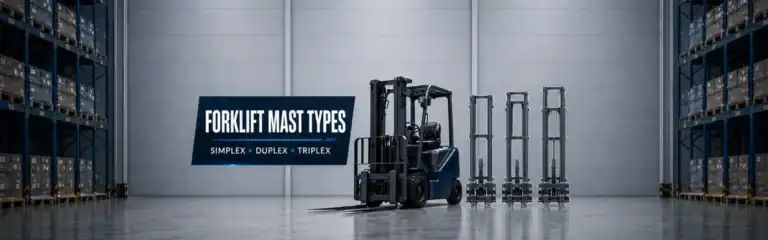
Free lift also matters inside containers and low-ceiling areas. It describes how far the forks can rise before the mast sections extend above the lowered mast height. A duplex, triplex or other mast configuration should therefore be selected from both the lift target and the overhead limits. Choosing a taller mast without an operating need can add cost, affect visibility and reduce capacity, while selecting a mast that only just reaches the rack beam may leave too little placement clearance.
3. Match the Power System to the Site and Duty Cycle
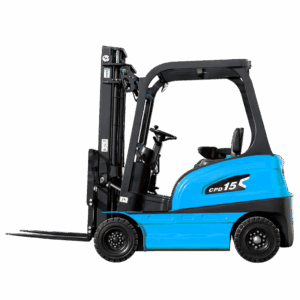
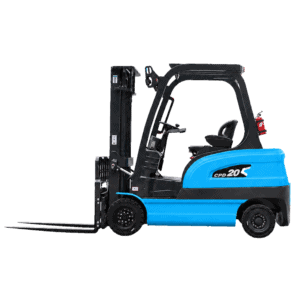
Power choice is an operating-system decision rather than a simple preference. Electric forklifts suit many warehouses, factories and paved loading areas where lower noise and no tailpipe exhaust at the point of use are important. The buyer must still plan charger input, charging windows, battery capacity, ambient temperature and the destination site’s electrical supply.
Diesel forklifts are commonly considered for outdoor loading, longer working periods and operations that prioritize rapid refueling. Ventilation, fuel storage, noise, emissions requirements and engine maintenance must still be reviewed. A standard industrial diesel forklift is not automatically suitable for loose soil, deep ruts, mud or significant gradients.
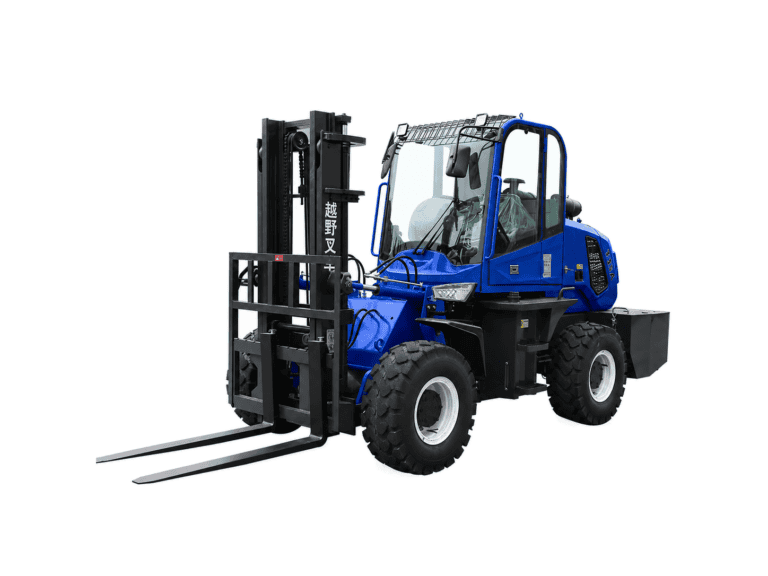
When uneven ground is the defining constraint, a 4WD rough-terrain model may provide the traction, ground clearance and tire configuration the route requires. The buyer should still confirm ground bearing conditions, slope, turning space and stability for the actual site.
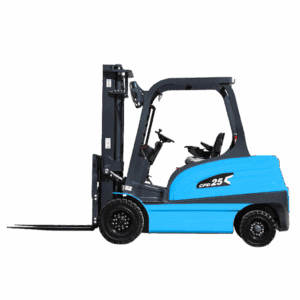
- Empieza con el Gama de montacargas eléctricos Anxing for mainly indoor work, paved surfaces and operations with a practical charging plan.
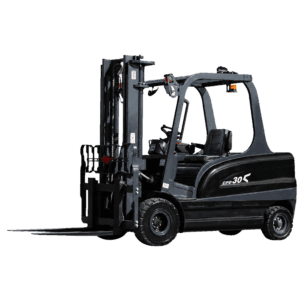
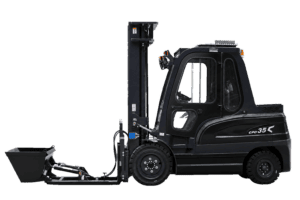
- Compare Montacargas a diésel Anxing when outdoor duty, operating hours and refueling access favor an internal-combustion truck.
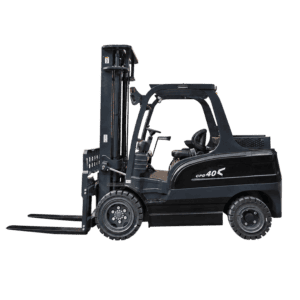
- Review Carretillas elevadoras para terrenos difíciles de Anxing when loose or uneven ground exceeds the intended operating conditions of a standard industrial truck.
Compare usable working hours, energy infrastructure, maintenance, tire wear, operator environment and service requirements. A lower purchase price does not create value if the machine interrupts production, cannot enter the work area or requires an impractical charging or refueling routine.
4. Verify Working Aisle Width, Turning Space and Access
Overall truck width tells you whether the forklift body can pass straight through an opening. It does not show whether the truck can turn with a load and place that load into racking. For stacking operations, the more useful figure is the working aisle width, often identified as Ast on a specification sheet.
The required aisle depends on turning radius, pallet or load dimensions, load distance, fork geometry and the operating clearance applied by the site. Pallet orientation also matters. A calculation based on a standard pallet may not be suitable for long materials, custom crates or loads carried in a different direction.
Measure the narrowest usable aisle between fixed obstructions, not only the nominal distance between rack lines. Account for rack protection, columns, pallet overhang, wall projections and pedestrian separation. Also check the cross aisle needed to enter the working aisle and the turning area near doors, docks or staging zones.
A three-wheel forklift can improve maneuverability, but the category name alone does not prove fit. The verified Anxing CPDS12, for example, has a 1,100 mm overall width and a 1,590 mm turning radius. These figures make it relevant for compact warehouse evaluation, but the required working aisle still depends on the buyer’s pallet and clearance. At the other end of the range, the Anxing AX-100 lists a 3,460 mm turning radius and working aisle figures of 5,350 mm for right-angle operation and 5,550 mm for parallel operation. Higher capacity can change the space requirement substantially.
How Anxing Forklift Examples Fit Different Requirements
| Application signal | Anxing example | Rated capacity and lift | Relevant fit data | Lo que aún queda por confirmar |
|---|---|---|---|---|
| Light indoor pallet handling | AX-15 electric forklift | 1,500 kg; 3,000 mm lift | 1,200 mm overall width; 60 V / 70 Ah standard battery specification | Actual load center, aisle requirement, duty cycle, mast and battery configuration |
| Compact warehouse turning | Carretilla elevadora eléctrica de tres ruedas CPDS12 | 1,200 kg; 3,000 mm standard lift | 1,100 mm overall width; 1,590 mm turning radius | Working aisle with the buyer’s pallet, required clearance and battery configuration |
| General 3-ton electric handling | AX-30 electric forklift | 3,000 kg; 3,000 mm lift | 1,200 mm overall width; 60 V system; configurable battery and forks | Residual capacity at height, attachment derating and shift energy demand |
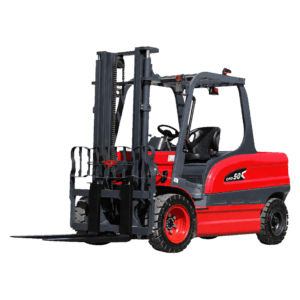
| Heavy indoor or paved-site electric work | AX-50 electric forklift | 5,000 kg; 3,000 mm lift | 1,220 mm overall width; 80 V / 300 Ah standard battery specification | Load center, floor capacity, charging plan, route and final fork specification |
| Outdoor industrial handling | CPC-20 to CPC-35 diesel range | 2,000–3,500 kg; 3,000 mm standard lift; 3–6 m optional lift range | 500 mm rated load center; pneumatic tires standard with optional solid tires | Engine and transmission configuration, surface, destination requirements and attachments |
| Uneven outdoor ground | CPCD20 to CPCD35 rough-terrain range | 2,000–3,500 kg; 3,000 mm standard lift | 4WD; 180–230 mm ground clearance across the range | Ground condition, slope, turning area, tire choice and site-specific capacity |
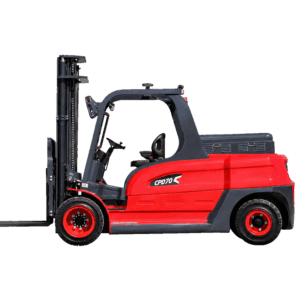
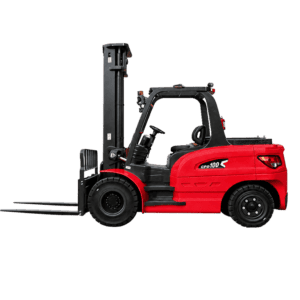
| Very heavy electric handling | AX-100 electric forklift | 10,000 kg at 600 mm load center; 3,000 mm lift | 80 V / 900 Ah battery; 2,000 mm width; 3,460 mm turning radius | Floor and route capacity, aisle layout, attachment, charging infrastructure and load geometry |
These figures help establish an initial shortlist; they do not approve a specific application. Battery, mast, fork, tire and attachment choices can change dimensions, machine weight and performance. Request the final specification sheet for the exact configuration quoted and compare it with the measurements collected from the site.
A Practical Forklift Selection Process
- Map the load envelope. Record the maximum weight, dimensions, pallet type, weight distribution and any irregular loads. Include the pallet, bin or fixture in the total.
- Define the vertical task. Provide the top rack-beam height, required fork height, highest loaded condition, doorway height, ceiling restrictions and any need for free lift.
- Map the route and access limits. Measure the narrowest doorway, usable working aisle, cross aisle, turning area, dock plate, ramp, elevator and trailer entrance.
- Describe the surface and environment. State indoor or outdoor use, floor type, uneven ground, gradients, dust, moisture, temperature and any clean-operation requirement.
- Select a power shortlist. Compare electric charging windows and electrical supply with diesel refueling, ventilation and service requirements. Choose rough-terrain construction only when the route demands it.
- Add the real duty cycle. Give loads per hour, travel distance, working hours per shift, number of shifts and planned breaks. A battery ampere-hour figure or engine power rating alone does not predict productivity.
- Specify attachments before capacity approval. State fork length and any side shifter, fork positioner, clamp, rotator or other attachment so the final load center and rated capacity can be checked.
- Validate the complete configuration. Compare the data sheet, capacity information, working aisle requirement, overall dimensions, mast envelope, tire type and charger or engine configuration against the real site measurements.
If two models remain after this process, compare the bottleneck that can stop the job. In a warehouse, this may be loaded aisle width, lowered mast height or residual capacity at the top rack. In a yard, it may be traction, ground clearance or turning space. In multi-shift use, it may be charging time, battery strategy or refueling access.
Common Forklift Buying Mistakes
Choosing capacity from the average load
The truck should be evaluated against the heaviest expected load in its real dimensions and configuration. An average weight can hide occasional long, high or offset loads that create the critical case.
Using truck width as the aisle requirement
Passing straight through an aisle is different from turning with a load and entering a rack opening. Confirm the working aisle requirement for the actual load orientation and add the operational clearance required by the site.
Matching maximum lift exactly to the rack beam
The forks must raise the pallet high enough to clear the support beam, and the truck must retain adequate capacity there. Lowered mast height, extended mast height and free lift must also fit the building.
Adding attachments after the truck is selected
An attachment can add weight and move the load center forward. Include it during selection so the complete truck-and-attachment combination can be rated and documented correctly.
Choosing electric or diesel from purchase price alone
The site, duty cycle, energy infrastructure, ventilation, maintenance plan and operator environment determine operational fit. Compare the complete working system rather than only the forklift invoice.
What to Send in a Forklift RFQ
A precise request helps Anxing recommend a configuration instead of returning a generic price. Include:
- maximum and typical load weights, including the pallet or fixture;
- load length, width, height and direction on the forks;
- required lift height and highest rack-beam level;
- narrowest aisle, doorway, cross aisle and overhead clearance;
- indoor or outdoor route, surface condition and maximum gradient;
- daily hours, number of shifts, travel distance and charging or refueling windows;
- preferred power type, if already decided;
- fork length, side shift, clamp or other attachment requirements;
- quantity, destination country and destination port or city;
- required manuals, markings, inspection or destination-specific documents to confirm.
Photos and a simple layout drawing are valuable when access is tight. Mark rack lines, aisle dimensions, doorway sizes, gradients and turning points. For unusual loads, include a drawing showing dimensions, lifting points and center of gravity if available. These details allow the application to be matched against the relevant Anxing category and show which specifications still require confirmation before quotation.
Confirm the Exact Configuration Before Ordering
A model name and nominal capacity are the start of a forklift specification, not the end. The final confirmation should state the rated load center, permitted capacity at the required height, mast type, fork dimensions, attachments, tires, power configuration, overall dimensions and working aisle requirement for the buyer’s load. It should also identify the charger input or engine configuration, requested documents and shipping destination.
Using this information makes comparisons more meaningful. Instead of comparing two generic three-ton forklifts, the buyer can compare two complete configurations against the same load, route, duty cycle and access limits. That is the point at which capacity, height, power and aisle width become a practical purchase decision.